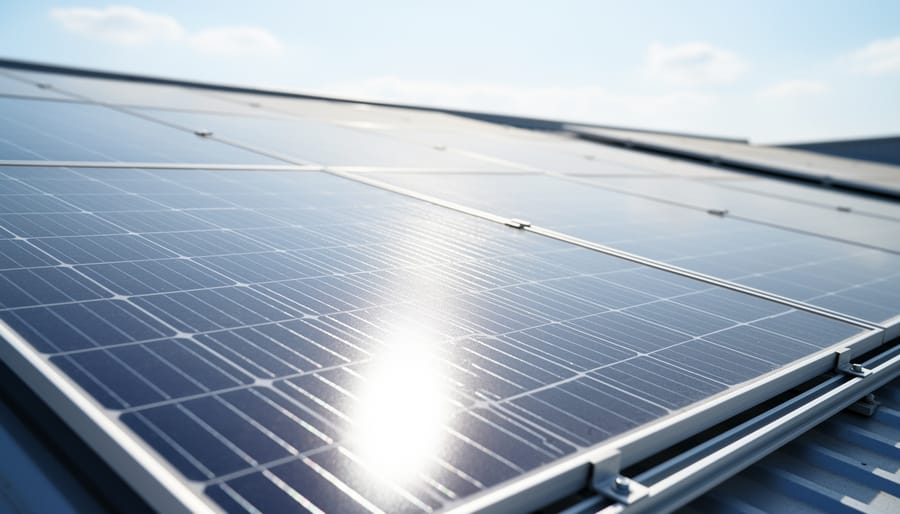
Solar panel efficiency is the percentage of sunlight hitting a panel that gets converted into usable electricity. The formula is simple: efficiency = (power output ÷ (panel area × solar irradiance)) × 100. A panel producing 400 watts across 1.9 square meters under standard test sunlight of 1,000 watts per square meter works out to roughly 21 percent.
That single number tells you how much clean power a panel can squeeze from limited roof space. Higher efficiency means fewer panels for the same output, which matters if your roof is small or you want to cut your carbon footprint as fast as possible.
But efficiency isn’t the whole story. A lab rating and a panel on your actual roof can differ, thanks to heat, shade, angle, and dust. Cutting-edge cell designs are also pushing ratings higher every year, so knowing how to read the math helps you compare options with confidence.
This guide walks through the calculation step by step, with an example you can repeat on any spec sheet. You’ll also see what nudges real-world results up or down, how common cell types stack up, and how efficiency connects to the overall effectiveness of your solar setup.
What Solar Panel Efficiency Means in Plain Language
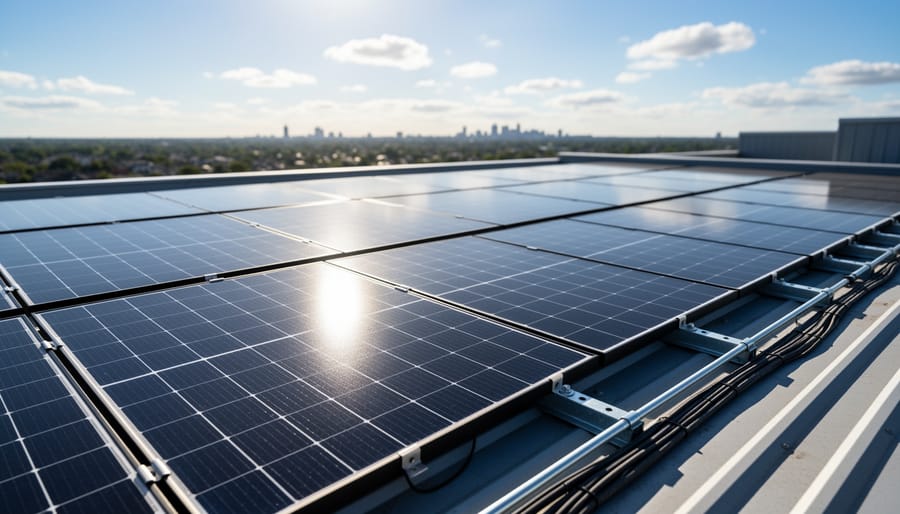
Think of solar panel efficiency as a conversion rate. Sunlight goes in, electricity comes out, and efficiency tells you what share of that sunlight becomes usable power. A panel with 20% efficiency turns about one-fifth of the light hitting it into electricity.
People often mix this up with other terms, so let’s separate them. Efficiency is a percentage. Power output is measured in watts and tells you how much electricity a panel can produce at once. Overall effectiveness is the bigger picture: how well a whole system performs on your roof, in your climate, over many years.
Why does the percentage matter? A higher number means more power from the same space. Two panels can be the exact same size, but the more efficient one will generate more clean energy. That’s a real win when roof space is tight or you’re powering portable gear.
Here are a few terms you’ll see on spec sheets:
- Efficiency
- The percentage of sunlight striking a panel that is converted into electricity.
- Irradiance
- The amount of solar power landing on a surface, usually measured in watts per square meter (W/m²).
- Watt-peak (Wp)
- A panel’s maximum rated power output under ideal lab conditions.
- Standard Test Conditions (STC)
- The standardized lab setup used to rate panels, with a fixed light level and cell temperature so comparisons are fair.
- Photovoltaic (PV) cell
- The small semiconductor unit inside a panel that turns sunlight directly into electrical current.
- Temperature coefficient
- A number showing how much a panel’s output drops as it heats up above its rated temperature.
As for typical ranges, most modern rooftop panels fall somewhere between about 15% and 23%, with premium options reaching higher. That might sound low, but it’s perfectly normal, and it keeps improving as the technology advances.
How to Calculate Solar Panel Efficiency, Step by Step
A Quick Worked Example You Can Try Yourself
Let’s put the formula to work with a panel you might actually see on a spec sheet. Say a panel is rated at 400 watts and measures 1.7 meters by 1.1 meters.
First, find the area: 1.7 × 1.1 = 1.87 square meters.
Next, work out the sunlight hitting it under standard test conditions: 1,000 W/m² × 1.87 m² = 1,870 watts of incoming solar power.
Now divide the panel’s output by that incoming power: 400 ÷ 1,870 = 0.214.
Multiply by 100, and you get an efficiency of roughly 21.4%. That means a little over one-fifth of the sunlight landing on the panel becomes usable electricity.
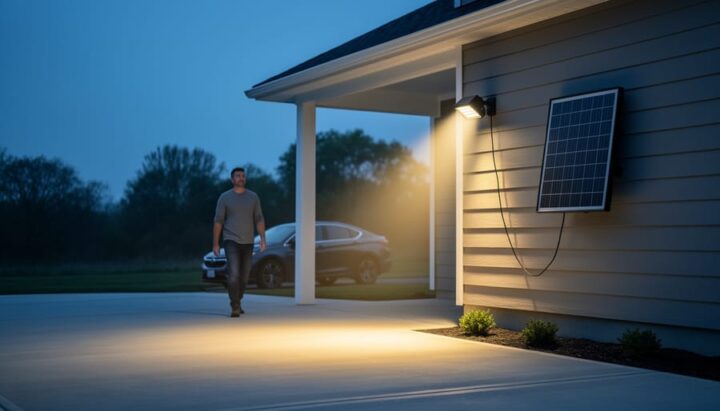
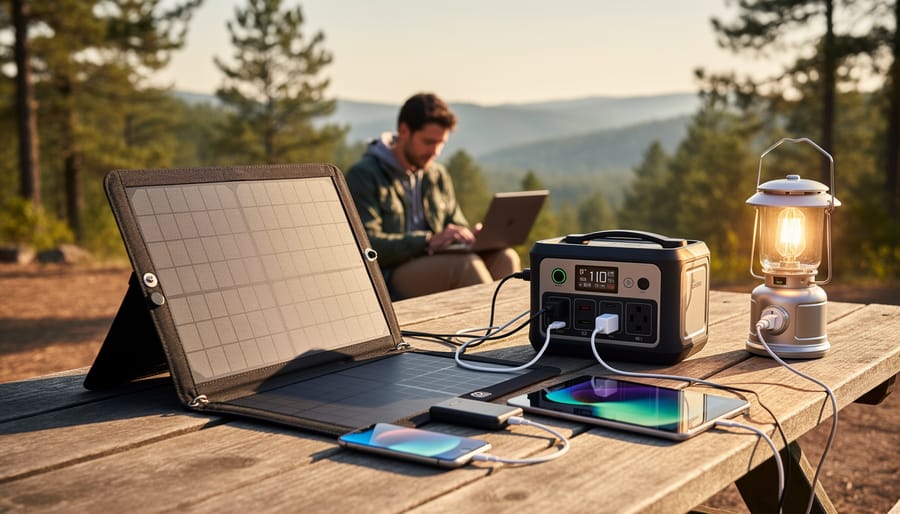
The same method works for small gear, too. A compact solar charger rated at 10 watts with a surface of 0.06 m² gets incoming power of 60 watts, so 10 ÷ 60 gives about 16.7% efficiency. The same math also helps you judge the panels powering outdoor gadgets like solar flood lights where size is limited and every bit of conversion counts.
Try it with your own spec sheet!
What Affects Solar Panel Efficiency in the Real World
Lab ratings and rooftop reality rarely match. The efficiency printed on a spec sheet comes from Standard Test Conditions (STC): 1,000 W/m² of sunlight, a cell temperature of 25°C, and a controlled light spectrum. Your panel will almost never see those exact conditions, so everyday performance lands a little above or below the rated figure. That gap is normal, and you can shrink it.
Sunlight itself changes all day. Intensity drops on cloudy mornings, and the angle of the sun shifts with the seasons. Panels capture the most energy when sunlight hits them straight on, so orientation and tilt matter more than most people expect.
Heat is the sneaky one. Panels like light, not warmth, and higher temperature lowers output by a small percentage for every degree above 25°C. A hot, clear summer afternoon can deliver less than a crisp spring day.
Here are the main factors and a quick way to improve each one:
- Sunlight angle: Set your tilt to roughly match your latitude, and adjust seasonally if you can.
- Temperature: Leave a gap behind the panels so air can flow and carry heat away.
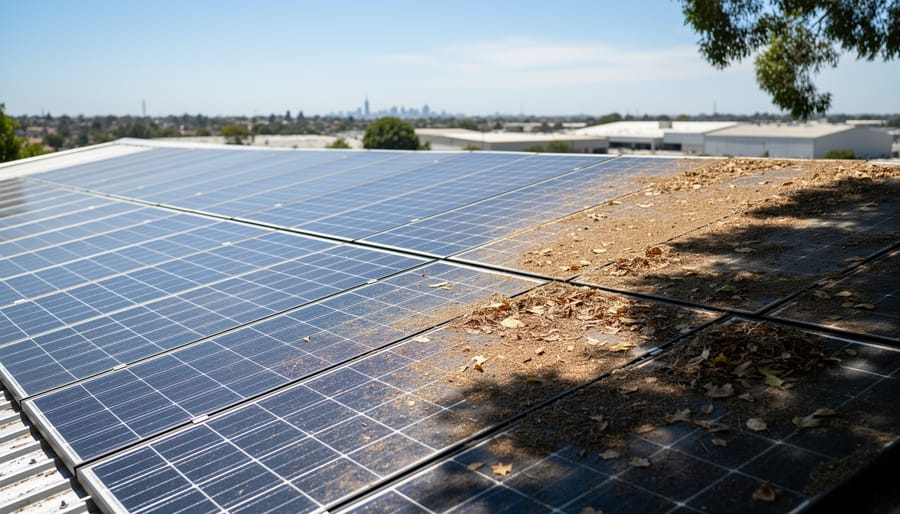
- Shading: Trim nearby branches and avoid even partial shade, since one shaded cell can drag down a whole string.
- Dirt and dust: Rinse panels gently when they look grimy, ideally in the cool of morning.
- Orientation: Face panels toward the equator (south in the northern hemisphere) for the longest sun exposure.
- Age: Choose quality panels with a solid warranty, since output fades slowly year after year.
Age-related degradation is gradual, typically a fraction of a percent per year, so a well-made panel keeps producing clean power for decades. Knowing the common solar panel disadvantages helps you spot which of these factors will matter most for your setup.
The good news is that most of these levers are within your control. A little planning at install time and a little upkeep afterward can keep your real-world numbers close to what the spec sheet promised.
Types of Solar Cells and How Their Efficiency Compares
Not every solar cell converts sunlight at the same rate. The material and the way the cell is built set a ceiling on efficiency, which is why two panels of identical size can deliver noticeably different power.
The three classic technologies
Monocrystalline panels are cut from a single, pure silicon crystal. Because electrons move through that uniform structure with little resistance, they generally sit at the top of the traditional range, often landing around 20 to 23 percent. They’re easy to spot by their dark, uniform look.
Polycrystalline panels use silicon melted and cast from many fragments. The crystal boundaries slow electrons down a bit, so efficiency typically runs a few points lower, often in the mid to high teens. They’re usually less expensive to make, which keeps them relevant for budget-minded projects.
Thin-film panels deposit ultra-thin layers of light-absorbing material onto glass, metal, or even flexible backing. Most sit lower on the efficiency scale, but they’re lightweight, bendable, and perform well in warm or low-light conditions, making them handy for unusual surfaces.
Cutting-edge upgrades
The real excitement is in newer cell designs that squeeze more power from the same silicon:
– PERC (Passivated Emitter and Rear Cell): adds a reflective rear layer so light that passes through gets a second chance to be absorbed.
– TOPCon: uses an ultra-thin tunnel layer that reduces electron losses, pushing efficiency higher.
– Heterojunction (HJT): pairs crystalline silicon with thin-film layers to cut energy loss and handle heat well.
– Perovskite tandem cells: stack a perovskite layer on top of silicon so each layer captures a different part of the light spectrum, promising conversion rates beyond what silicon can reach alone.
Why this matters for the planet
Higher efficiency means more clean electricity from less material, less roof space, and fewer panels to manufacture, transport, and install. Every extra percentage point is a small win for the environment, letting the same rooftop or portable panel do more of the work that fossil fuels once did.
Putting Efficiency to Work: Choosing Panels and Maximizing Output
Once you can calculate efficiency, you can compare spec sheets honestly. Check the efficiency percentage, the wattage, and the physical size side by side, and see which panel gives you the most power for the space you actually have.
Higher efficiency earns its price when space is tight. A small roof, a camping backpack, or an off-grid cabin all benefit from squeezing more watts out of every square inch. With plenty of open roof or ground, a lower-efficiency, lower-cost panel is perfectly effective, and often pays itself back sooner. Either way, you’re cutting carbon with every kilowatt-hour you make. If you’re planning a rooftop, our home solar timeline shows what to expect. For smaller upgrades, solar disk lights are an easy way to put compact panels to work.
To get the most from any panel:
– Face it toward the sun and tilt it to suit your latitude.
– Keep it clear of shade, dust, and leaves.
– Give it airflow so heat doesn’t cut output.
Solar Panel Efficiency: Common Questions Answered
What is a good solar panel efficiency percentage?
Most modern rooftop panels land somewhere around 18 to 23 percent, and anything in that range is solid. Premium panels can go higher, while budget options sit a bit lower.
Does higher efficiency always mean better?
Not always. If you have plenty of space, a slightly lower-efficiency panel can deliver the same total power for less money.
How much does heat affect efficiency?
Hot panels make less electricity, so output dips on scorching days even under bright sun. Good airflow behind the panel helps keep temperatures down.
Can I calculate efficiency for a portable solar panel?
Yes, the same formula works. Use its rated wattage and its surface area, and you’ll have your answer in minutes.
Panels also lose a small fraction of their output each year, which is why checking the warranty’s degradation terms is worth a minute of your time.
Solar panel efficiency really does come down to one simple idea: how much of the sunlight hitting your panel becomes usable power. Take the panel’s rated wattage, divide it by the irradiance times the panel area, multiply by 100, and you have a number you can trust and compare.
Knowing that number changes how you shop. Instead of squinting at a wall of specs, you can see at a glance which panel makes the most of your roof, your campsite, or your backpack. Higher efficiency isn’t always the answer, but now you’ll know exactly when it’s worth paying for.
So grab a spec sheet and run the math on your next solar purchase. It takes a minute, and it puts you in control. Every extra bit of power you squeeze from the same sunshine means more clean energy and less waste, which is a win for your wallet and the planet.