
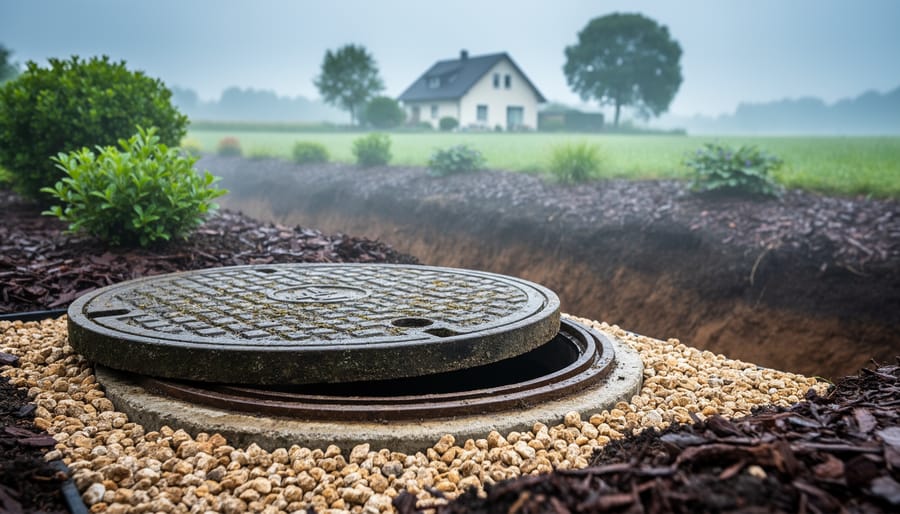
A septic tank survey evaluates whether your on-site wastewater system meets regulatory standards and functions without harming local ecosystems. When surveys reveal failing or non-compliant systems, the environmental stakes are high: untreated effluent can contaminate groundwater with nitrates and pathogens, while phosphorus runoff accelerates algal blooms in nearby waterways. The good news? Modern diagnostic technology and eco-conscious remediation solutions now make it possible to address septic issues before they cascade into serious environmental damage.
Understanding the environmental dimension of septic surveys matters more than ever in 2026. Approximately 25% of UK households rely on septic systems, and aging infrastructure means many operate below current environmental protection standards. Your survey isn’t simply a compliance checkbox. It’s a diagnostic tool revealing how wastewater moves through soil, whether treatment zones function properly, and if discharge stays within safe ecological thresholds.
Failed surveys typically indicate one of three scenarios: hydraulic overload degrading treatment capacity, structural damage allowing raw sewage to bypass filtration, or inadequate drainage fields saturating surrounding soil. Each scenario carries distinct environmental consequences, from localized nutrient pollution to widespread aquatic ecosystem disruption.
The environmental responsibility of homeowners extends beyond legal obligation, particularly for those who sell house with septic tank systems. Emerging solutions like aerobic treatment units, constructed wetland systems, and smart monitoring sensors transform traditional septic challenges into opportunities for sustainable water management. Addressing survey findings with these innovative approaches protects local environments while often increasing property value through demonstrable ecological stewardship.
What Septic Tank Surveys Reveal About Environmental Health

A septic tank survey examines far more than just the structural integrity of your system. When inspectors assess your tank and drainage field, they’re measuring indicators that directly reveal how your property interacts with the surrounding ecosystem. These assessments track sludge and scum accumulation levels, which determine how efficiently your system processes waste without releasing harmful contaminants into the ground. They also evaluate the condition of baffles, which prevent solid waste from escaping into the drain field where it can overwhelm soil bacteria and leach into groundwater.
The drainage field inspection provides critical environmental data. Inspectors look for saturated soil, standing water, or unusually lush vegetation patches, all warning signs that untreated effluent is surfacing rather than filtering properly through soil layers. This matters because soil acts as nature’s treatment plant, removing pathogens and breaking down nutrients before water reaches aquifers. When your drain field fails this function, you’re essentially creating a direct pipeline from household waste to drinking water sources.
Survey results also measure the tank’s capacity to prevent hydraulic overload. Systems operating beyond their design limits release partially treated wastewater into the environment, carrying elevated nitrogen and phosphorus levels that fuel algae growth in nearby water bodies. For home sellers, these measurements carry dual significance: they satisfy legal disclosure requirements while quantifying your property’s ecological footprint.
Modern surveys increasingly incorporate percolation tests and soil analysis that reveal how effectively your site can treat wastewater naturally. Sandy soils may allow too-rapid drainage without adequate filtration, while clay-heavy soils can cause backup and surface contamination. Each measurement in your survey report translates to a specific environmental outcome, whether protecting local watersheds or risking ecosystem disruption. Understanding these connections transforms a routine inspection into a meaningful assessment of environmental stewardship.
The Hidden Environmental Costs of Failing Septic Systems

Groundwater Contamination and Aquifer Damage
Leaking septic systems create direct pathways for contamination to reach groundwater aquifers that millions of households depend on for drinking water. When tanks crack or drainfields become saturated, untreated wastewater carrying E. coli, salmonella, and viruses seeps downward through soil layers. This bacterial contamination can persist in groundwater for months, making wells unsafe for consumption even miles from the source.
Nitrates from human waste pose an equally serious threat. Unlike bacteria that soil can sometimes filter, nitrates travel rapidly through groundwater. Concentrations above 10 mg/L, common near failing septic systems, cause methemoglobinemia in infants and have been linked to certain cancers. Rural communities relying on private wells face the highest risk, as they lack municipal water treatment safeguards.
Phosphates compound the problem by traveling from septic systems into underground water networks. Once in aquifers, these nutrients create conditions for harmful bacterial growth and reduce oxygen levels essential for aquatic ecosystems. The damage extends beyond immediate contamination zones because groundwater flows continuously, spreading pollutants across entire watersheds. A single malfunctioning system identified during a home survey can indicate broader aquifer degradation affecting neighboring properties.
Impact on Local Waterways and Marine Life
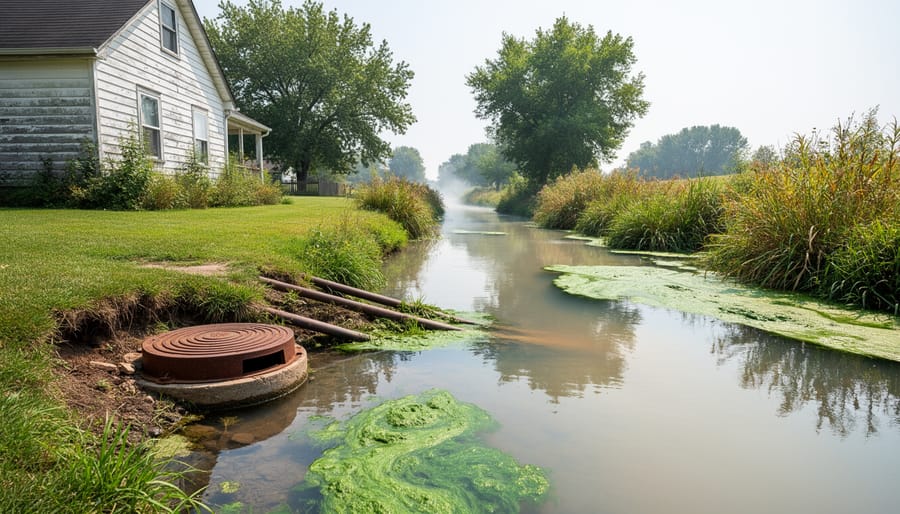
When failing septic systems discharge excess nitrogen and phosphorus into surface water, they trigger a cascade of ecological damage that extends far beyond your property line. These nutrients act as fertilizer in aquatic environments, fueling explosive algal growth that transforms clear waterways into thick green mats.
As these algal blooms die and decompose, bacteria consume oxygen in the water, creating hypoxic “dead zones” where fish, shellfish, and other marine organisms suffocate. A single compromised septic tank can contribute enough nutrients to accelerate this process in small ponds or streams, particularly during periods of heavy rainfall or flooding when overflow reaches waterways more readily.
Coastal areas face compounded challenges, as nutrient-rich septic runoff disrupts delicate salt-marsh ecosystems and contributes to harmful algal blooms that produce toxins dangerous to both wildlife and humans. Manatees, sea turtles, and fish populations have all experienced die-offs linked to septic pollution. The environmental cost extends to recreational impacts, beaches close, fishing grounds become unproductive, and drinking water sources require expensive treatment to remain safe for consumption.
Soil Degradation and Chemical Accumulation
When septic systems malfunction, they transform soil from a living ecosystem into a chemical repository. Excess sodium from household cleaners disrupts soil structure, causing clay particles to compact and reducing water infiltration by up to 60%. Phosphorus accumulation creates an artificial nutrient imbalance that favours weedy species over native plants, while persistent organic compounds from pharmaceuticals and personal care products can remain in topsoil for decades.
The microbial communities that naturally break down organic matter become overwhelmed or poisoned by the chemical load. Nitrogen saturation from untreated effluent kills beneficial soil bacteria and earthworms, leaving the ground biologically inert. This degradation makes affected areas unsuitable for gardening or farming, and remediation often requires removing contaminated soil entirely. Properties with long-term septic failures may face restoration costs exceeding £15,000 before the land can support healthy vegetation again.
Why Septic Surveys Matter More in 2026’s Climate Reality
Climate change has fundamentally altered how we must think about septic systems. Extended droughts stress water tables while intense rainfall events overwhelm drainage fields, creating a perfect storm for septic failures. What worked adequately twenty years ago now poses genuine ecological risks as weather patterns become less predictable and water resources face unprecedented pressure.
Water scarcity has transformed septic contamination from a localized concern into a regional crisis. Communities across the country are drawing from deeper aquifers and relying more heavily on groundwater reserves. When a failing septic tank leaches nitrates and pathogens into these diminishing water sources, the damage spreads further and persists longer than it did when water was abundant. For home sellers, this means a survey revealing system deficiencies carries greater environmental weight than the same findings would have a decade ago.
Septic systems designed for 20th-century rainfall patterns are increasingly inadequate for the climate variability we’re experiencing now, making regular assessment not just good practice but environmental necessity.
The assessment becomes especially critical as coastal and lakeside properties face dual threats. Rising water tables push contaminated effluent toward the surface before soil bacteria can neutralize pathogens. Meanwhile, warmer water temperatures accelerate algal bloom formation when nutrient-rich septic overflow reaches waterways. A survey that identifies marginal system performance gives sellers the chance to prevent ecological damage that would be amplified by current environmental conditions.
Regulatory frameworks are tightening in response to these realities. Many jurisdictions now require more rigorous septic inspections during property transfers, recognizing that climate pressures make older systems unreliable. Buyers increasingly view comprehensive septic surveys as non-negotiable, understanding that inheriting an environmentally problematic system means inheriting both repair costs and ecological responsibility. This heightened awareness makes thorough pre-sale assessment a practical necessity, not just an ethical choice.
Eco-Friendly Septic Survey Practices for Responsible Home Sellers
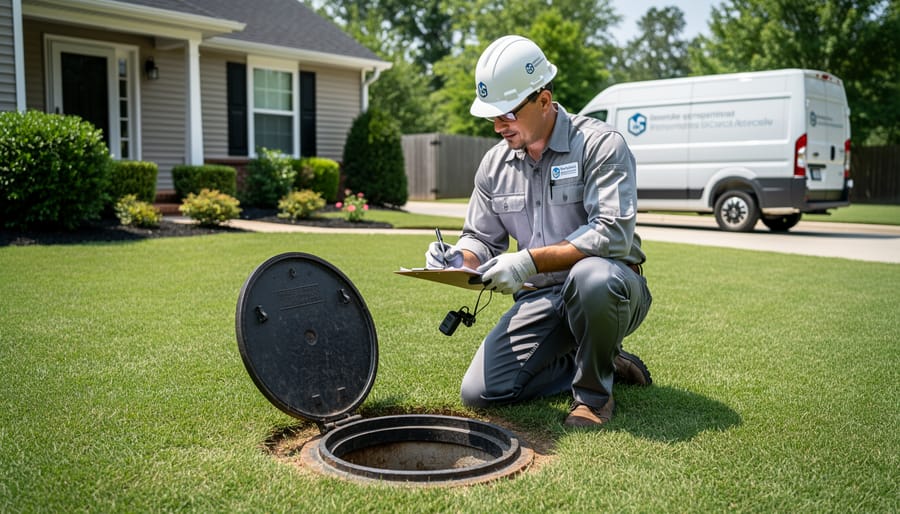
When scheduling your septic tank survey, start by asking potential service providers about their environmental protocols. Reputable companies now offer low-impact inspection methods that minimize disturbance to your yard’s ecosystem. Request inspectors who use camera technology and electronic monitoring equipment rather than extensive excavation. Modern camera systems can assess tank integrity and drainage field conditions through existing access points, eliminating unnecessary digging that disrupts soil structure and plant roots.
Timing your survey matters environmentally. Schedule inspections during dry weather whenever possible. Wet soil compacts more easily under equipment weight, damaging soil structure and potentially harming beneficial microorganisms. This compaction reduces your soil’s ability to filter wastewater naturally and can create erosion problems after you sell. If your area experiences seasonal water table fluctuations, coordinate the survey when groundwater levels are lower to prevent inadvertent contamination during the inspection process.
Choose service providers who use biodegradable marking dyes for drainage field testing. Traditional chemical tracers can persist in soil and groundwater long after the survey concludes. Ask about their waste handling procedures too. Responsible companies properly dispose of any extracted septic matter at licensed treatment facilities rather than dumping it in locations where it might contaminate natural areas.
If your survey reveals necessary repairs, prioritize eco-conscious solutions. Select pumping services that recycle treated effluent when possible and use fuel-efficient vehicles. For tank repairs, consider materials with lower embodied carbon than traditional concrete, such as high-density polyethylene tanks that require less energy to manufacture and transport. When drainage field restoration becomes necessary, work with contractors who preserve existing vegetation where feasible and use native plants for any required landscaping afterward.
Document your environmental choices throughout the process. Keep records showing you selected low-impact survey methods and eco-friendly remediation approaches. This documentation demonstrates environmental responsibility to potential buyers who increasingly value sustainable property features. It also provides a roadmap for the new owners to maintain the system conscientiously.
Before the inspection, mark any sensitive areas on your property, wetlands, stream buffers, or established gardens, so technicians can route equipment around them. This simple step prevents unnecessary ecological damage while still allowing thorough system assessment.
Turning Survey Results Into Environmental Action
Your septic survey report isn’t just paperwork, it’s a blueprint for environmental improvement. When issues surface, you face a choice: address them properly or pass the problem to the next homeowner. Choosing action reduces ecological harm while demonstrating transparency that builds buyer confidence.
Start by prioritizing findings based on environmental severity. A cracked distribution box allowing raw sewage into groundwater demands immediate attention, while cosmetic lid damage poses minimal ecological risk. Focus your budget where it matters most for ecosystem protection. Many sellers discover that fixing critical issues costs less than expected, particularly when compared to negotiated price reductions after buyers review the same survey.
| Survey Finding | Environmental Severity | Eco-Friendly Solution | Approximate Cost |
|---|---|---|---|
| Drain field saturation | High (groundwater contamination) | Aerobic treatment unit upgrade | $8,000, $15,000 |
| Tank structural cracks | Critical (direct leakage) | Tank replacement with high-density polyethylene model | $3,500, $7,000 |
| Insufficient bacteria levels | Moderate (incomplete treatment) | Bio-additive program + pump schedule adjustment | $200, $600 |
| Outdated single-chamber design | Moderate (reduced treatment efficiency) | Multi-chamber retrofit or full replacement | $5,000, $12,000 |
Work with contractors who understand ecological implications, not just basic compliance. Request remediation methods that enhance treatment efficiency, adding baffles to improve solids separation, installing effluent filters to capture additional contaminants, or upgrading to systems with built-in nitrogen reduction. These improvements protect local waterways while creating compelling selling points.
Document everything. Buyers increasingly value environmental responsibility, and detailed records of eco-conscious repairs strengthen your property’s appeal. Photographs of before-and-after conditions, receipts from certified environmental contractors, and performance data from post-repair inspections all contribute to a narrative of stewardship that resonates with environmentally aware purchasers willing to pay premium prices for responsibly maintained homes.
Innovative Technologies Reducing Septic System Environmental Impact
Modern septic technology has evolved far beyond the basic concrete tanks most homeowners imagine. For sellers ready to upgrade before listing, several innovative systems now deliver superior environmental performance while potentially increasing property value.
Advanced aerobic treatment units represent perhaps the most significant leap forward. Unlike conventional anaerobic systems that rely on slow bacterial breakdown in oxygen-starved environments, aerobic units actively pump oxygen into the treatment process. This accelerates waste decomposition and produces effluent with up to 90% fewer pollutants. The treated water emerging from these systems approaches near-drinking quality, dramatically reducing groundwater contamination risk. While installation costs run higher initially, typically $10,000 to $18,000, these systems often satisfy stricter environmental regulations and appeal to eco-conscious buyers.
Constructed wetland systems offer a nature-based solution that mimics how natural wetlands filter water. These engineered landscapes use specifically selected plants, soil layers, and beneficial microorganisms to treat septic effluent through biological processes. As wastewater flows through the wetland bed, plant roots and microbes break down contaminants while the soil filters out suspended particles. This approach eliminates the need for chemical treatments, operates on zero electricity, and creates attractive landscaping features. They work exceptionally well in areas with sufficient property space and moderate climates.
Sand filter systems provide another proven alternative, forcing effluent through specially graded sand beds that trap bacteria and filter nutrients before the water reaches groundwater. These systems excel in areas with high water tables or sensitive ecosystems where conventional drain fields pose contamination risks.
Among dominant technologies emerging in septic treatment, membrane bioreactor systems stand out for their compact footprint and exceptional treatment quality. Using fine membranes to separate solids while beneficial bacteria digest waste, these units produce remarkably clean effluent suitable for irrigation or surface discharge in many jurisdictions. Though they require electricity and professional maintenance, their ability to meet the strictest environmental standards makes them valuable in ecologically sensitive locations.
Smart monitoring systems, which track septic performance through sensors and send alerts before problems develop, represent the future of preventative maintenance. Installing these during a pre-sale upgrade demonstrates environmental responsibility while giving buyers peace of mind.
The Long-Term Environmental Benefits of Pre-Sale Septic Transparency
Comprehensive pre-sale septic surveys create environmental benefits that extend far beyond the individual transaction. When sellers document their system’s condition and share findings transparently with buyers, they establish a baseline of accountability that influences how the property’s septic system will be maintained for years to come. New homeowners armed with detailed survey results understand their system’s current state, required maintenance schedules, and potential vulnerabilities, knowledge that prevents the neglect patterns responsible for most environmental damage.
This transparency cultivates a maintenance culture that protects entire watersheds. Properties with documented septic histories receive more frequent professional servicing because owners recognize their responsibility through inherited records. Communities where pre-sale surveys are standard practice show measurably lower rates of groundwater contamination compared to areas where septic conditions remain hidden until crisis points. The collective impact mirrors the principle behind distributed renewable energy systems like home wind turbines and MPPT controller technology, individual responsible actions aggregate into community-wide environmental protection.
The ripple effects strengthen over successive property sales. Each transparent transaction raises buyer expectations for documentation, creating market pressure that incentivizes proper maintenance even among sellers who might otherwise defer system care. This positive feedback loop transforms septic responsibility from an individual burden into a normalized community standard, protecting local ecosystems through cultural shift rather than enforcement alone.
Your septic tank survey represents far more than a checkbox on your pre-sale to-do list. It’s a decisive moment where property ownership intersects with environmental responsibility, and where your choices ripple outward to affect groundwater quality, local ecosystems, and community health for years to come.
Every survey you commission, every repair you authorize, and every upgrade you consider sends a clear signal about our collective commitment to water protection and soil health. When you address septic system issues before transferring ownership, you’re not just smoothing a transaction, you’re preventing future contamination events, protecting aquifers that serve entire communities, and demonstrating that environmental stewardship matters in everyday property decisions.
The environmental stakes have never been higher. Water scarcity challenges, climate-driven precipitation changes, and increased development pressure on natural systems mean that responsible septic management isn’t optional, it’s essential infrastructure for ecological resilience.
Think of your septic survey as you would energy planning for renewable power: both require upfront investment and thoughtful decision-making, but both generate lasting benefits that extend far beyond individual convenience. Schedule that comprehensive survey. Address the findings proactively. Choose technologies that minimize environmental impact. Your property transaction can be a catalyst for positive change, transforming a regulatory requirement into genuine environmental action that protects the water, soil, and ecosystems we all depend on.


