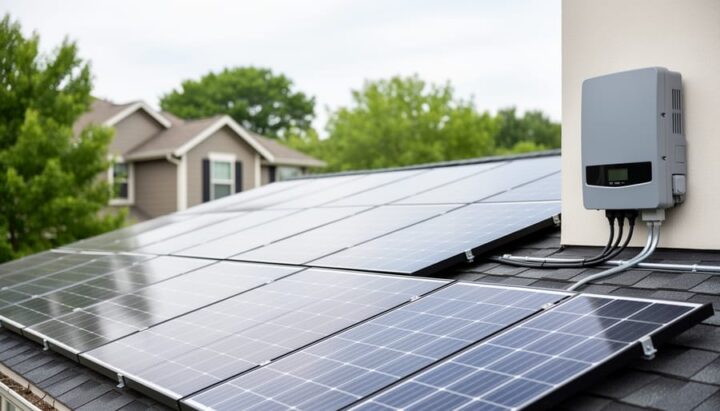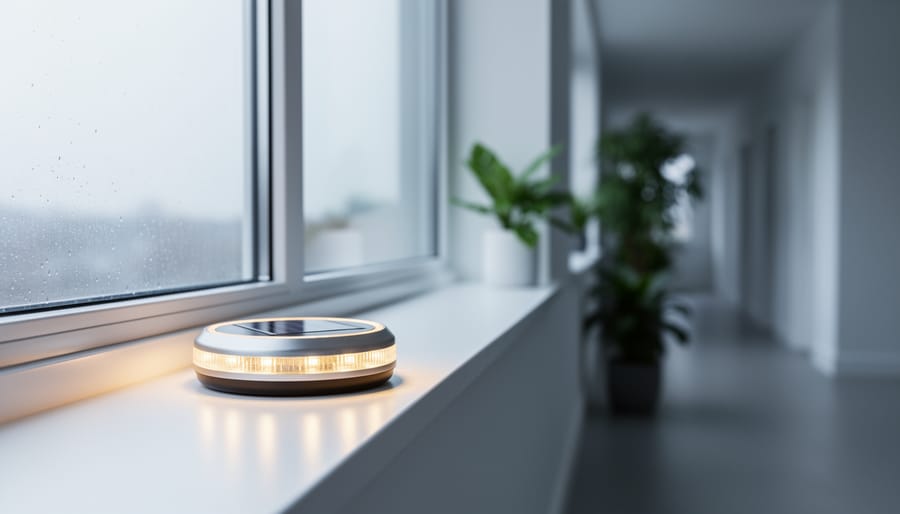
Solar lights have evolved far beyond garden pathways and outdoor patios. Today’s photovoltaic technology allows these energy-harvesting fixtures to function effectively indoors, offering a practical solution for reducing electricity consumption while maintaining reliable illumination.
The concept is straightforward. Indoor solar lights capture sunlight through windows or placement near natural light sources during the day, converting photons into stored electrical energy in built-in batteries. When darkness falls, that stored power illuminates LED bulbs with zero draw from the grid. Modern innovations like Solar Disk Lights demonstrate how compact, efficient designs can deliver meaningful brightness in closets, hallways, basements, and other spaces where conventional wiring proves expensive or impractical.
Why consider this technology? The environmental math is compelling. Each indoor solar fixture eliminates continuous phantom loads and reduces your carbon footprint without sacrificing convenience. You’re essentially creating micro power plants throughout your home, each one independently generating clean energy.
The question isn’t whether solar lights can work indoors, but rather where they work best and which models suit your specific needs. Placement strategy matters significantly. A unit positioned near a south-facing window charges far more effectively than one tucked in a windowless corner. Understanding these nuances separates successful implementation from disappointing results.
This guide explores the practical reality of indoor solar lighting, from technical capabilities to room-by-room applications, helping you make informed decisions about integrating this sustainable technology into your living space.
Understanding Solar Disk Lights and Indoor Solar Technology
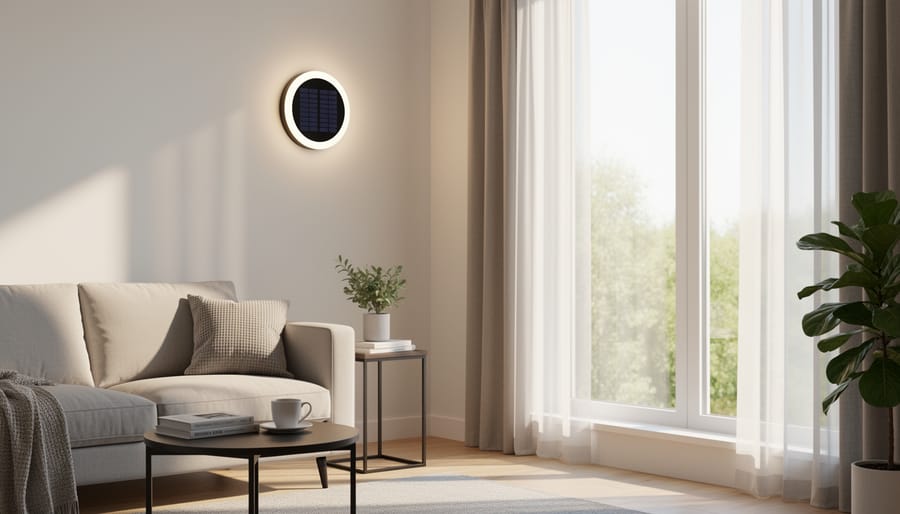
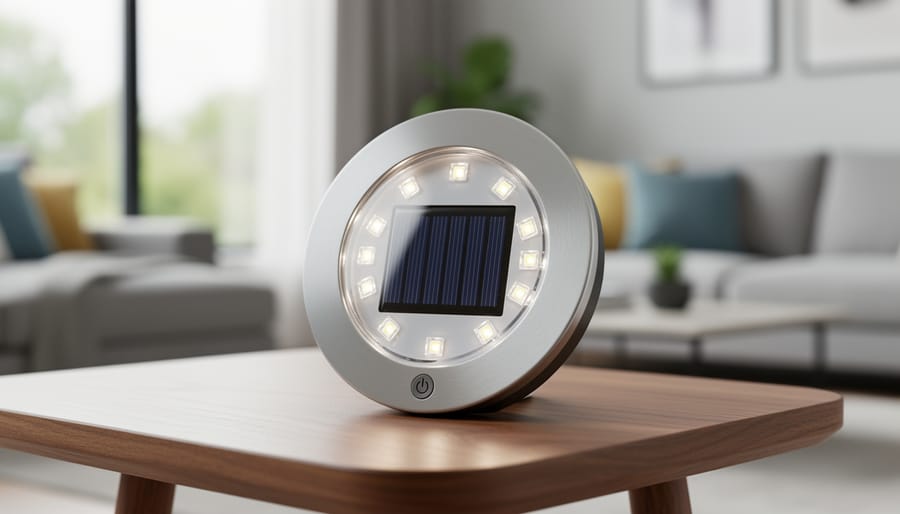
Solar Disk Lights represent a breakthrough in making solar technology practical for indoor environments. These compact, self-contained units combine a solar panel, rechargeable battery, and energy-efficient LED bulbs in a single fixture, often resembling a small disk or puck that mounts easily to walls, ceilings, or surfaces. Unlike traditional solar lights designed exclusively for yards and gardens, Solar Disk Lights are engineered with indoor flexibility in mind: many models feature detachable solar panels connected via extension cables, allowing the panel to charge in a sunny window or outdoors while the light itself illuminates interior spaces up to 15 feet away.
The technology behind indoor solar lighting has advanced dramatically in recent years. Modern lithium-ion batteries now store more energy in smaller packages, providing multiple hours of bright illumination from a single day’s charge. LED efficiency has improved to the point where a 5-watt solar panel can power lights producing 400-600 lumens, enough to light a small room or workspace. The charging mechanics work identically to outdoor solar lights: photovoltaic cells in the panel convert sunlight into electrical energy, which charges the integrated battery during daylight hours, then powers the LEDs after dark.
The key innovation enabling indoor use is separating the solar panel from the light fixture. Early solar lights required the entire unit to sit in sunlight, making indoor placement impossible. Current designs use low-voltage cables connecting panels to lights, letting you harvest solar energy wherever it’s abundant while placing illumination exactly where you need it. Some units include built-in motion sensors, dimming functions, and adjustable brightness settings, features that maximize battery life and adapt to different indoor lighting needs throughout the day.
When Solar Lights Make Sense Indoors
Indoor solar lights aren’t a universal solution, but they shine in specific scenarios where traditional wiring proves impractical or expensive. Understanding these sweet spots helps you determine whether solar makes sense for your space.
Garages and detached workshops top the list. These structures often lack adequate electrical outlets or require costly wiring runs from the main house. A solar disk light mounted near a window captures daytime sun while providing reliable illumination for evening projects. The independence from your home’s electrical system means no breaker trips when you’re running power tools alongside lighting.
Basements with small ground-level windows represent another ideal application. These spaces typically suffer from dim natural light and may have limited electrical access points. Positioning a solar panel in a south-facing basement window can generate enough charge to illuminate darker corners throughout the day, particularly useful for storage areas or laundry rooms where you need occasional task lighting rather than continuous brightness.
Emergency preparedness situations showcase solar lighting’s most compelling advantage. During power outages, solar disk lights continue functioning without generators or battery anxiety. Keep one charged near a sunny window as backup lighting for hallways, bathrooms, or stairwells. This redundancy costs nothing to maintain and requires zero fuel or battery replacements.
Sheds and outbuildings without electrical service become immediately more functional with solar lighting. Whether you’re storing garden tools or converting a shed into seasonal workspace, running electrical lines often costs hundreds to thousands of dollars. A solar light system installs in minutes for a fraction of that investment.
Off-grid cabins and tiny homes naturally align with solar lighting technology. These dwellings already embrace energy independence, and indoor solar lights reduce the load on main solar arrays. They’re particularly effective in rooms with generous window exposure where panels can charge efficiently.
Rental properties present a unique case. Tenants can install solar lights without landlord permission or property modifications, and take them when moving. This portability eliminates the landlord-tenant negotiation around electrical upgrades while providing better lighting than desk lamps.
The common thread? These spaces either lack convenient electrical access, benefit from installation simplicity, or serve occupants who value energy independence over maximum brightness.
The Environmental and Economic Benefits
Switching to solar lights for indoor use delivers measurable environmental and economic wins that compound over time. While the upfront investment might give you pause, the math tells a compelling story once you account for eliminated electricity bills and the carbon you’re keeping out of the atmosphere.
Consider a typical bedroom lit by a 60-watt incandescent bulb for five hours daily. That’s roughly 110 kilowatt-hours per year, translating to about $13 in electricity costs (at $0.12/kWh) and approximately 77 pounds of CO2 emissions annually. Replace that with a solar disk light, and both figures drop to zero. Scale that across multiple rooms, and you’re looking at $50-100+ in annual savings for a typical household, with no grid power required.
| Factor | Traditional 60W Bulb | Solar Disk Light |
|---|---|---|
| Annual Energy Use | 110 kWh | 0 kWh |
| Annual Cost | $13.20 | $0 |
| CO2 Emissions (yearly) | 77 lbs | 0 lbs |
| Average Lifespan | 1,000 hours | 50,000+ hours |
The environmental benefits extend beyond carbon reduction. Solar lights eliminate the need for manufacturing, packaging, and transporting replacement bulbs every few months. LED technology in solar disk lights lasts 50 times longer than incandescent options, cutting waste significantly. You’re also reducing strain on the electrical grid during peak hours, which helps utilities avoid firing up dirty backup generators.
From a resource perspective, indoor solar lighting represents genuine energy independence. Power outages become irrelevant for your solar-equipped spaces. You’re immune to rate hikes, time-of-use pricing schemes, and the rising costs of grid maintenance that utilities pass to consumers. Every room you transition to solar becomes a permanent fixed cost, predictable and inflation-proof.
The payback period for quality solar disk lights typically runs 2-4 years, after which you’re banking pure savings. Factor in avoided replacement costs for conventional bulbs, and that timeline shortens. More importantly, you’re voting with your wallet for distributed renewable energy, demonstrating that solar technology belongs inside homes, not just on rooftops.
Key Features to Look for in Indoor Solar Lights
# Key Features to Look for in Indoor Solar Lights
Shopping for solar lights designed for indoor use requires focusing on specifications that differ from outdoor models. Battery capacity sits at the top of your checklist, look for lithium-ion batteries with at least 2000mAh capacity. This ensures your lights run through the night after a full day’s charge, even during winter months when sunlight is scarce. Quality models store enough energy for 8-12 hours of operation, critical for spaces like garages or workshops where you need consistent evening illumination.
Lumens output determines actual brightness. For ambient lighting in closets or hallways, 100-200 lumens suffices. Task lighting in workspaces requires 400-600 lumens minimum. Most solar disk lights specify lumens per fixture, multiply this by the number of units you’re installing to gauge total room brightness. Don’t confuse lumens with wattage; LED efficiency means a 5-watt solar light can deliver brightness previously requiring 40-watt incandescent bulbs.
Charging efficiency directly impacts performance indoors. Premium solar lights feature monocrystalline panels that convert 20-22% of available light into electricity, outperforming cheaper polycrystalline alternatives at 15-17%. This difference matters significantly when your panel sits behind window glass, which already blocks 10-15% of solar energy. Detachable panels with extension cables solve this limitation, letting you mount the panel outside while keeping the light fixture indoors.
Motion sensors and adjustable brightness settings extend battery life substantially. A light burning at full brightness for eight hours drains batteries much faster than one dimming to 30% until motion activates full power. Programmable options let you customize behavior, some models offer “always on low/bright when motion detected” modes ideal for stairwells or entryways.
Installation flexibility determines where you can actually use the lights. Magnetic mounts work brilliantly on metal surfaces in garages and sheds. Adhesive backing suits finished walls but limits repositioning. Screw-mount options provide permanence. The best solar lights for indoor applications include multiple mounting accessories, letting you adapt installation to various surfaces without drilling holes or hiring electricians.
Check for replaceable batteries. Lithium-ion cells degrade after 500-1000 charge cycles, so replaceable batteries extend your product’s lifespan from two years to potentially a decade.
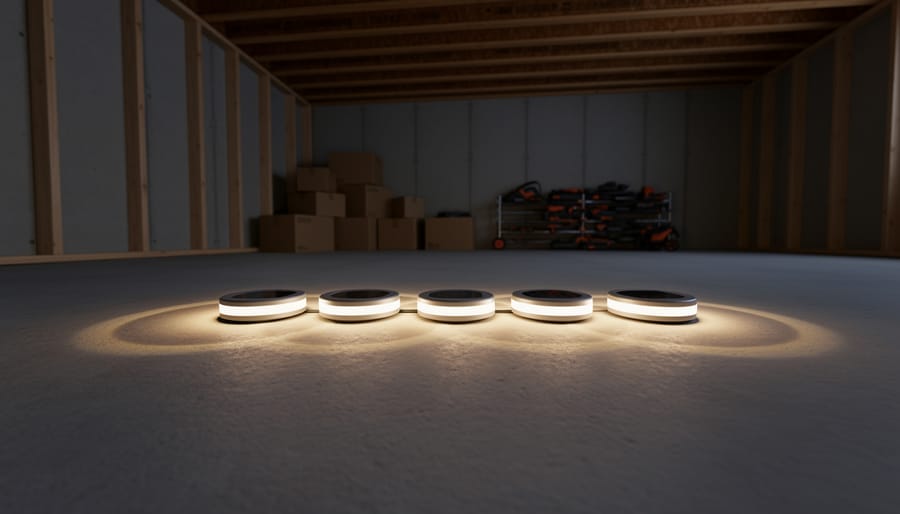
Installation and Optimization Tips
Getting your solar disk lights set up properly indoors makes the difference between frustration and reliable performance. The charging panel placement drives everything else, so start there.
Position the solar panel within six feet of a south-facing window if possible. South-facing windows capture the most consistent sunlight throughout the day in the Northern Hemisphere. West-facing windows work as a second choice, delivering strong afternoon light. Clean the window glass regularly, dust and grime block surprisingly large amounts of solar energy. If your window has UV-filtering film or low-E coatings, you’ll see reduced charging efficiency. Test the actual charge you’re getting over a few days rather than assuming the window will work.
Most solar disk lights include extension cables between the panel and the light unit. Use this to your advantage. Mount the panel directly against the window using suction cups or adhesive strips while positioning the light fixture itself wherever you need illumination, across the room, in a closet, or above a workspace. This separation gives you flexibility without compromising charging performance.
For mounting the light unit, adhesive backing works well on smooth surfaces like drywall, tile, or metal. Clean the surface with rubbing alcohol first to ensure strong adhesion. On textured walls or temporary installations, magnetic mounts or removable command strips prevent damage. Some users drill small holes for screw mounts when permanent installation makes sense.
During winter months or in rooms with limited natural light, rotate your approach. Temporarily move the solar panel to the sunniest window in your home during the day, then reconnect it to the light at night. Alternatively, take the panel outside for a few hours weekly for a full charge boost. This occasional outdoor charging tops off the battery and extends its lifespan.
Angle matters more than most people realize. Tilt the panel to face the sun’s path rather than laying it flat against vertical glass. Even a 20-degree adjustment can increase charging by 15-30 percent during low winter sun angles.
Limitations and Realistic Expectations
Solar lighting technology has come a long way, but indoor applications still face inherent constraints that no amount of innovation can fully eliminate. The most significant limitation is brightness. Even high-quality solar disk lights typically produce 100-400 lumens, which works fine for ambient lighting or supplemental illumination but cannot replace the 800-1,600 lumens of a standard ceiling fixture. If you need bright task lighting for detailed work, traditional powered options remain superior.
Natural light dependency creates another fundamental challenge. Solar panels require direct or strong indirect sunlight to charge effectively, meaning rooms without south-facing windows or those shaded by trees and buildings will struggle to maintain consistent performance. Winter months compound this issue as daylight hours shrink and sun angles become less favorable. In northern latitudes, expect 40-60% reduced charging capacity during December and January compared to summer months.
- Zero electricity costs and reduced grid dependency for lighting needs.
- Immediate functionality during power outages without backup systems.
- Simple installation with no wiring or electrician required.
- Portable and repositionable as your lighting needs change.
- Brightness limited to 100-400 lumens, insufficient for primary room lighting.
- Performance drops significantly without access to direct sunlight.
- Seasonal variations reduce winter charging capacity by 40-60%.
- Not practical for windowless spaces or deeply interior rooms.
Certain spaces simply do not suit solar lighting at all. Interior bathrooms, closets without windows, and basement rooms far from light wells cannot generate enough charge to function reliably. Rooms that require consistent, bright illumination throughout evening hours will drain batteries faster than daytime charging can replenish them.
The key to satisfaction with indoor solar lights is matching expectations to reality. They excel as supplemental lighting, emergency backup, and solutions for spaces with electrical access challenges. They do not replace your main lighting infrastructure. Approach them as a strategic addition rather than a complete lighting solution, and you will appreciate what they offer without disappointment over what they cannot deliver.
Solar lights for indoor use represent more than just an alternative lighting solution, they’re your entry point into renewable energy adoption. By integrating solar disk lights strategically throughout your home, you’re making a tangible shift away from complete grid dependence without the complexity or cost of whole-home solar installations.
Start where it makes the most sense: that dim garage, the shed lacking electrical access, or the basement corner that needs emergency lighting. Each solar light you install reduces your electricity consumption incrementally while proving the viability of solar technology in your daily life. These small wins build confidence and familiarity with renewable energy systems.
The environmental math is compelling. Even a handful of solar lights eliminates fossil fuel consumption for those specific applications, contributing to lower household carbon emissions. Multiply that across thousands of homes, and the collective impact becomes substantial.
Think of indoor solar lighting as renewable energy training wheels. You’re developing the mindset and habits that support larger sustainable transitions, understanding solar charging cycles, optimizing light placement, and recognizing where renewables excel versus their limitations. This practical knowledge becomes invaluable as you consider broader green energy investments down the road.