
In the interest of transparency, we earn a commission on some purchases made through links on this site. As an Amazon Associate I earn from qualifying purchases.
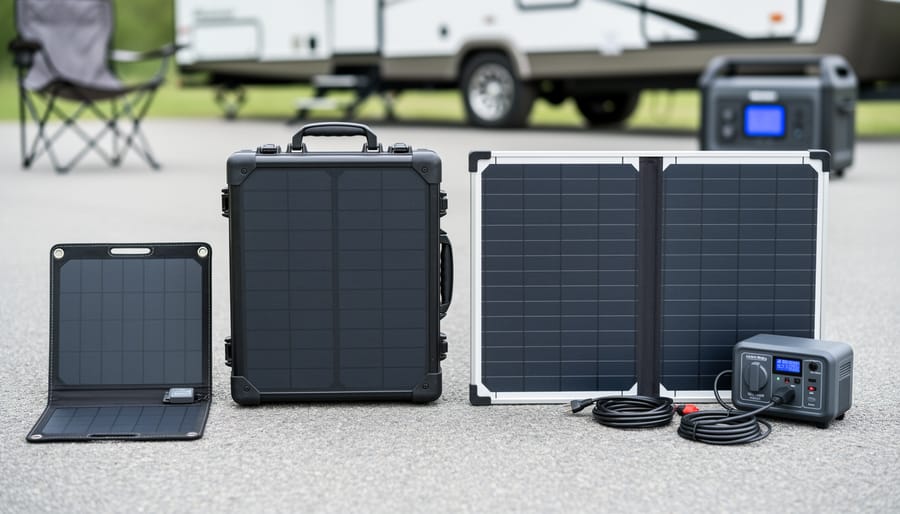
The best portable solar panel is the one that matches how you’ll actually use it, and for most people in 2026 that means choosing between four clear winners. The Renogy 200 Watt N-Type Solar Panel leads for fixed or semi-permanent setups, thanks to its smaller, lighter design and IP67 weatherproof rating. The EcoFlow 45W Portable Solar Panel is our pick for compact power-station pairing. The DOKIO 400W Portable Solar Panel Suitcase suits high-output basecamps, and the Voltset 20W 12V kit is the one to buy for battery maintenance.
Why the split? Because “portable” means different things to a weekend hiker and an RV owner. Sunlight is free, clean and quiet, and the right panel turns it into usable power without a drop of fuel. The wrong one sits in a closet.
We approached this list the way you’d shop: by looking at what each panel is built to do and how it behaves in the situations it’s meant for. Efficiency decides how much power you harvest from limited space. Weight decides whether you’ll carry it. Weatherproofing decides whether it survives a surprise storm.
Below, you’ll find a ranked shortlist, a side-by-side comparison, and a plain-English buying guide so you can choose with confidence.
Our Top Picks at a Glance
Here’s the quick answer if you’re short on time. These are our top portable solar panels, ranked by who they suit best, with value described in plain terms rather than numbers.
- Renogy 200 Watt N-Type Solar Panel, best for fixed or semi-permanent setups: a 200W panel with a smaller, lighter design and an IP67 rating, which makes it a solid mid-range choice for RVs, cabins and boats.
- EcoFlow 45W Portable Solar Panel, best for compact power-station pairing: a small, grab-and-go option for day trips and light camping, with value that sits at the budget end of the range.
- DOKIO 400W Portable Solar Panel Suitcase, best for high-output basecamps: a suitcase-style kit built for stationary stays where output matters more than carrying ease, positioned as a premium pick.
- Voltset 20W 12V Solar Panel Battery Charger Trickle Maintainer Kit, best for battery maintenance: a smart-controller kit that keeps car, boat and RV batteries topped up, and it is the most budget-friendly way to put sunlight to work.
Our editorial team’s hands-on evaluation focused on how each panel fits a real use case, not just on raw output. That’s why the list is organized by buyer type instead of a single “best” label. A basecamp user and a weekend hiker have very different needs.
If you’re also planning to light up a campsite, shed or driveway with clean energy, take a look at these solar flood lights as a handy companion to your portable setup. Keep scrolling for the full comparison table and detailed portable solar panels reviews.
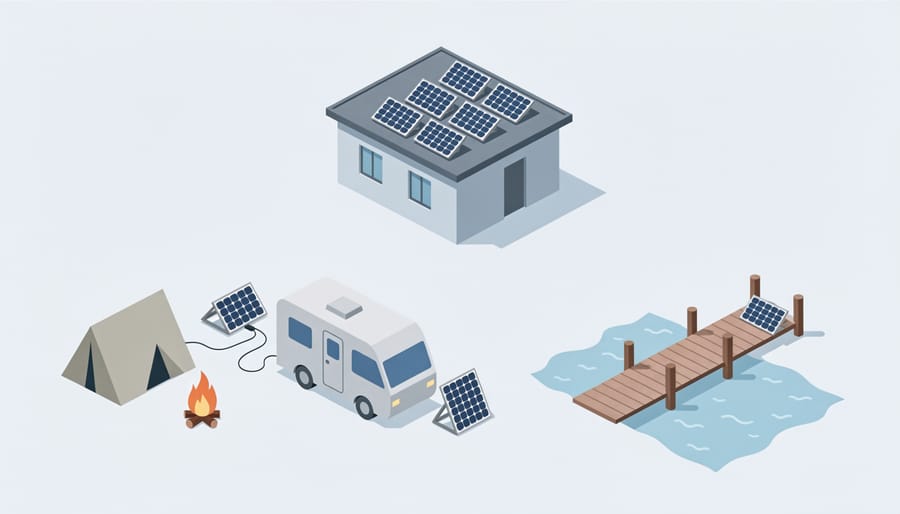
How We Evaluated These Portable Solar Panels (and Why You Can Trust the Picks)
Key Terms in Plain English
Solar jargon can feel like a wall of acronyms, but a handful of terms explain most of what separates one panel from another. Here are the ones worth knowing before you compare models:
- Watts
- The panel’s rated power output in ideal sunlight. More watts means faster charging, so a bigger-wattage panel tops up a battery or power station in less time.
- Efficiency
- How much sunlight a panel turns into electricity. Higher efficiency means more power from less surface area, which matters when you’re packing light.
- N-type cells
- A newer silicon cell design used in panels like the Renogy 200 Watt N-Type. It generally holds up better over time and in warmer conditions.
- IP rating
- A score for dust and water resistance. A rating such as IP67 means the panel is sealed against dust and can handle rain and splashes.
- Charge controller
- A small regulator that keeps power flowing safely into your battery. It prevents overcharging, which is why a kit like the Voltset trickle maintainer includes one.
Keep in mind that more watts isn’t always better for you. If you want the full picture of how efficiency is calculated, our guide to solar panel efficiency breaks it down simply. It also helps to know the disadvantages of solar, such as weaker output in shade, so your expectations match real-world conditions.
Portable Solar Panels Compared: Specs and Best Uses
Here is how the four picks stack up at a glance, so you can match a panel to your setup before reading the full reviews. We kept the table to attributes we could stand behind, and where a detail varies by version, the manufacturer listing is the place to confirm it.
| Panel | Standout feature | Best for | Value tier |
|---|---|---|---|
| Renogy 200 Watt N-Type | 200W output, smaller and lighter design, IP67 rating | RV, cabin, shed or boat mounting | Mid-range |
| EcoFlow 45W Portable | Compact, grab-and-go size; see manufacturer listing for compatibility | Topping up compatible power stations on day trips | Budget to mid-range |
| DOKIO 400W Suitcase | 400W kit folding to 29 x 26 in, with controller and dual USB | Stationary basecamps and backup power | Premium |
| Voltset 20W 12V Kit | Smart charge controller, waterproofing and safety protections | Trickle-charging car, boat or RV batteries | Budget |
The biggest split is between output and portability. The DOKIO suitcase delivers the most power, but at 52 lb it is a basecamp panel, not a trail companion. The EcoFlow sits at the opposite end, trading wattage for easy carrying, which suits light daily charging rather than heavy loads.
The Renogy lands in the middle and is the most flexible of the group. Its IP67 rating means it shrugs off rain and dust, so it works well when left outdoors. The Voltset is a different tool entirely: a small maintainer that keeps batteries healthy with clean energy.
If you plan to charge a battery bank, pair your pick with one of our tested portable power stations and check the manufacturer listing for connector and input compatibility before you buy.
1. Renogy 200 Watt N-Type Solar Panel, Best for Fixed or Semi-Permanent Setups
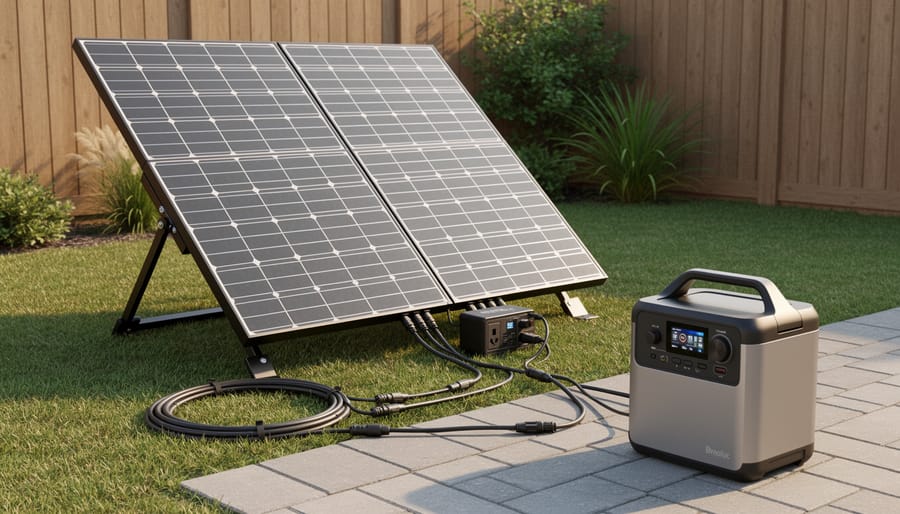
The Renogy 200 Watt N-Type Solar Panel is the one to look at if your panel will spend most of its time bolted down rather than carried around. It’s a current Amazon best seller in solar panels, and the upgraded design is smaller and lighter than earlier Renogy 200W models, which makes it easier to mount on tight roofs and cramped rigs.
What N-type means for you
Most panels use P-type silicon cells. N-type cells are built with a different doping process, and in practice that tends to mean better performance in dim light and slower power loss as the panel ages. For anyone chasing clean energy from every available hour of daylight, that’s a meaningful edge. Think of it as squeezing more usable power from the same patch of sky.
IP67 explained
The IP67 rating is the other headline feature. The first digit covers dust, and a 6 means fully dust-tight. The second covers water, and a 7 means it can handle temporary immersion. For real life, that means rain, splashes and dusty trails aren’t a problem, which is exactly what you want from gear that lives outdoors.
Who it suits
This panel is a strong match for:
– RV owners who want a roof-mounted charging source
– Cabin and shed setups that need steady off-grid power
– Boat owners mounting a panel on deck or a bimini
– Semi-permanent campsites where the panel stays put all season
Because it’s a rigid 200W panel rather than a fold-up blanket, we’d treat it as a “set it and leave it” choice. For fixed use, that’s an advantage: it’s sturdy, weather-tolerant and built to keep working season after season. For specific dimensions, weight and connector details, see the manufacturer listing.
Verdict
If you want dependable, weatherproof power for an RV, cabin, shed or boat, this is our pick for most fixed setups, and it sits in a sensible mid-range value tier. Look elsewhere if you plan to hike with your panel or need something that folds flat for a backpack. In that case, a lighter, foldable option will serve you better.
2. EcoFlow 45W Portable Solar Panel, Best for Compact Power-Station Pairing
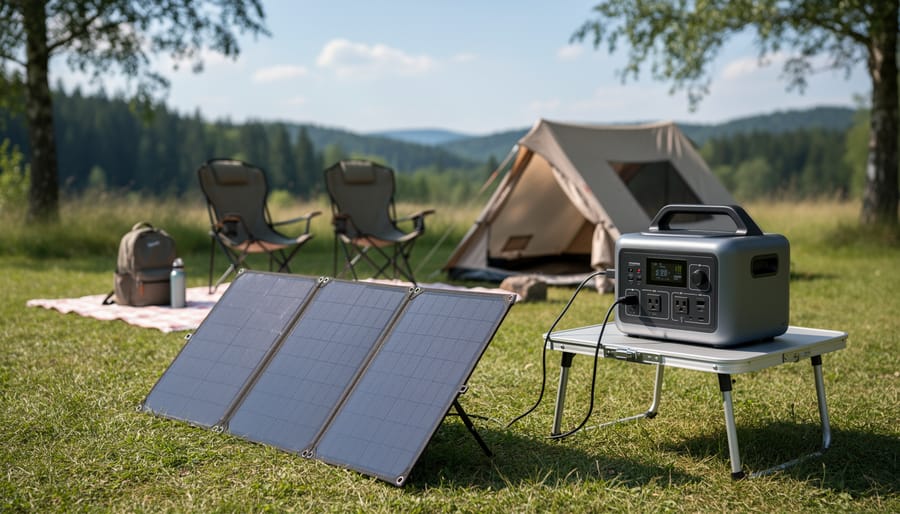
The EcoFlow 45W Portable Solar Panel is the small, grab-and-go option in this roundup, and its appeal comes from the ecosystem it belongs to. EcoFlow is known for modular portable power, where a panel, a power station and your everyday devices work together as one tidy system. This panel is the lightweight link in that chain, built to top up a compatible EcoFlow power station and keep small gadgets alive when you’re away from an outlet.
Think of it as a trickle of clean energy that fits your pace. On a day trip or a light camping weekend, you can unfold it in a sunny spot, connect it, and let it feed phones, a headlamp or a small speaker. It’s the kind of setup that makes solar feel effortless rather than technical, which is a big part of why compact panels like this have become popular with newcomers and tech fans alike.
Here is the honest part. A panel in this wattage class is designed for light daily use, not for running big appliances. If you want to power a fridge, a laser printer or a space heater, look at the higher-output options elsewhere in this list, such as the suitcase-style kit or the 200W panel. Think of this one as a supplement that stretches your battery between charges, not a full replacement for a larger solar array.
Because the brand’s strength is compatibility within its own lineup, check the manufacturer listing for exact ratings, connector details and which EcoFlow power stations it pairs with before you buy. That quick step ensures the panel fits the gear you already own or plan to add.
Verdict: Choose the EcoFlow 45W Portable Solar Panel if you already use, or plan to buy, a compatible EcoFlow power station and want a compact, easy panel for day trips, light camping and small-device charging. Look elsewhere if you need serious output for appliances or extended off-grid living. In value terms, it sits as a focused, ecosystem-minded pick rather than a do-everything workhorse.
3. DOKIO 400W Portable Solar Panel Suitcase, Best for High-Output Basecamps
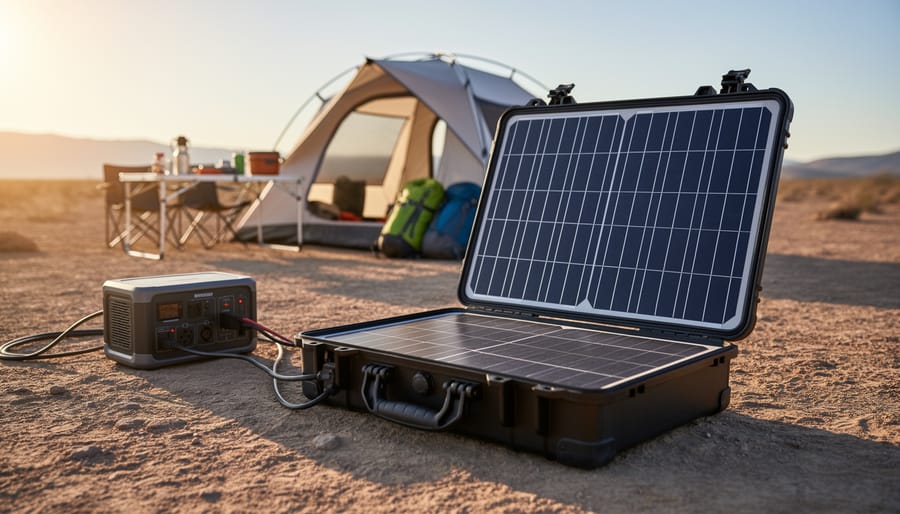
The DOKIO 400W suitcase kit is built for people who set up once and stay put. It’s a suitcase-style panel set that folds to 29 x 26 in and weighs 52 lb, and it includes a charge controller and dual USB ports. That bundle means you can start charging devices or feed a battery without hunting for extra parts, which is a real convenience at a basecamp.
Its appeal is output. At 400 watts, it sits in a higher power class than the compact panels elsewhere in this guide, so it makes the most sense where you’re parked for days: an RV stay, a long weekend at a campsite, or a backup setup for an outage. More watts means more clean energy collected from the same patch of sun, and that can cover bigger loads. If you want a primer on how efficiency works, it helps explain why panel size and wattage both matter when you’re sizing a kit. If you already own a battery bank, you can also pair with a power station to store that energy for the evening.
Now the honest part. At 52 lb, this isn’t a hiking panel. The suitcase design carries well from car to campsite, but you’d feel it on any real trail. Think of it as portable in the “load it in the trunk” sense, not the “clip it to your pack” sense. Folding to 29 x 26 in keeps storage manageable in a vehicle or closet, though you’ll want to plan the space.
Pros and cons
– Pro: High-output 400W class for stationary power needs
– Pro: Includes a controller and dual USB, so setup is straightforward
– Pro: Folds into a suitcase form for easier storage and transport by vehicle
– Con: 52 lb is heavy for backpacking or long carries
– Con: Overkill if you only need to top up a phone or small device
Verdict: Choose the DOKIO if output matters more than carrying ease and you’ll be camped in one spot. It’s a strong fit for RV owners, basecamp campers and anyone building a backup power setup. If you’re hiking or travelling light, look at the lighter, smaller panels in this guide instead.
4. Voltset 20W 12V Solar Panel Battery Charger Trickle Maintainer Kit, Best for Battery Maintenance
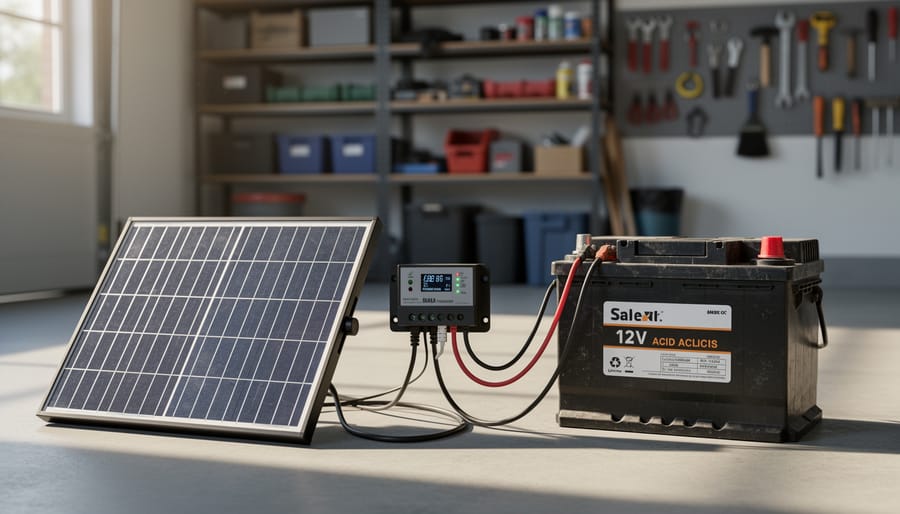
Some solar jobs aren’t about powering anything at all. They’re about keeping a battery healthy, and that’s where the Voltset 20W 12V Solar Panel Battery Charger Trickle Maintainer Kit earns its spot. It’s a current Amazon best seller, and it’s built for the quiet, unglamorous work of battery care.
How trickle charging works
Batteries slowly lose charge when they sit unused, even with everything switched off. A trickle maintainer sends a small, steady stream of power to offset that drain, so the battery stays topped up instead of sagging into a damaged state. Think of it as a slow drip that keeps a glass full, rather than a hose that fills it fast.
This kit pairs a 20W panel with a smart charge controller, which regulates the flow so the battery isn’t overcharged. Waterproofing and built-in safety protections add peace of mind for gear that lives outdoors, in a driveway, on a dock or under a cover.
Who it suits
It’s a natural fit for 12V batteries that spend long stretches parked: cars, boats, motorcycles and RVs. Seasonal vehicles are the classic case. Instead of plugging into a wall outlet or replacing a dead battery every spring, you let sunlight do the maintenance. That’s a small but real eco-benefit, since keeping a battery healthy longer means fewer replacements and less waste, all powered by clean energy.
What it isn’t
Be clear on the limits. This is a maintainer, not a power source for running appliances, lights or electronics. If you want to charge a power station or run gear at camp, look at the higher-wattage picks above. Like any panel, it also works best in good sun, so it helps to understand the cloudy-day limits before you count on it through a grey winter. And if your interest in solar leans toward home use, solar indoor lights are a different, simpler way to put sunlight to work.
Verdict: A sensible, budget-friendly choice for anyone who wants a set-and-forget way to keep a parked battery alive. Skip it if you need real output; choose it if you need steady, sun-powered upkeep.
How to Choose the Right Portable Solar Panel for You
Getting the Most From Your Panel
A few small habits can noticeably lift how much clean energy your panel actually captures. Start by aiming it squarely at the sun. A panel tilted toward the sky at midday collects far more than one lying flat, so angle it and adjust as the sun moves.
Keep the surface clean, too. Dust, pollen and bird droppings block sunlight, and a quick wipe with a soft cloth means more of it becomes usable power. Pair your panel with proper cables as well. Thin or damaged cables waste energy as heat, so use the ones made for your setup and keep the runs short.
Finally, match the panel to your device. A compact option like the EcoFlow 45W suits topping up small gear, while a Voltset 20W trickle kit is meant for maintaining a battery, not running appliances. Picking the right fit means none of that sunshine goes to waste.
Portable Solar Panels: Frequently Asked Questions
How many watts do I need for camping?
For phones, lights and small gadgets on a weekend trip, a compact panel like the EcoFlow 45W is often enough. If you want to run a cooler, laptop or other bigger gear, step up to a higher-output option such as the DOKIO 400W suitcase or the Renogy 200W.
Can I charge a power station with a portable solar panel?
Yes, that’s one of the most popular uses. Match the panel’s output and connector to your power station’s input limits, and check the manufacturer listing for exact compatibility before you buy.
Do portable panels work on cloudy days?
They do, just at reduced output, since clouds filter some of the sunlight. Expect slower charging, and give your panel a clear, unshaded spot to make the most of whatever light there is.
What does an IP rating mean?
It tells you how well a panel resists dust and water. The Renogy 200W’s IP67 rating, for example, means it’s built to handle dust and rain, which is reassuring for RV, cabin or boat mounting.
Foldable and suitcase-style designs are generally built to travel, but handle them with care and store them flat or in their case. Whichever you choose, treating your panel well keeps those clean-energy hours coming for years.
Choosing among the best portable solar panels comes down to matching the panel to the way you actually use it. The Renogy 200 Watt N-Type Solar Panel is the pick for most people, especially for fixed or semi-permanent setups like an RV, cabin or boat. The DOKIO 400W suitcase suits high-output basecamps, the EcoFlow 45W is a compact partner for power-station top-ups, and the Voltset 20W keeps car, boat and RV batteries healthy.
Whichever you choose, these are the criteria we used to judge each panel:
- Efficiency in turning sunlight into usable power
- Weight and folded size for carrying and storage
- Setup speed once you reach camp or park up
- Mounting options for roofs, frames or the ground
- Durability and weatherproofing against rain and dust
- Warranty and support from the manufacturer
- Value for the capability you actually need
Keep those in mind when comparing portable solar panels reviews and shortlists of the top portable solar panels. Every hour of sunlight you capture is clean energy that reduces your reliance on traditional power sources. When you’re ready for your next upgrade, explore more solar-powered gear on iTech Future.
Final Verdict
For most people, the Renogy 200 Watt N-Type Solar Panel is the best portable solar panel on this list. Its 200W output, smaller and lighter design and IP67 rating make it a dependable, weather-ready choice, and its standing as a current Amazon best seller backs that up. It suits RV, cabin and boat owners who want clean power from a setup they can leave in place.


