
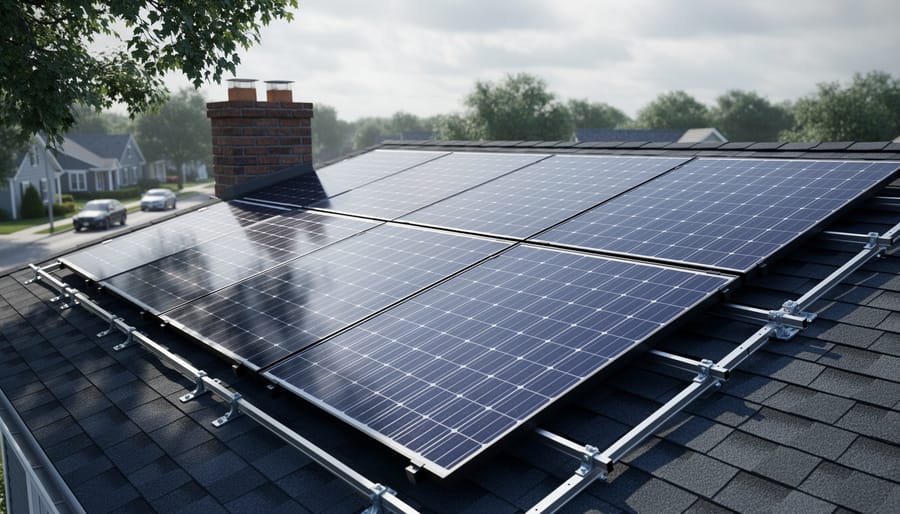
Solar panel disadvantages encompass the upfront costs, weather-dependent energy production, space requirements, and material lifecycle challenges that can affect residential and commercial installations. While solar technology has advanced dramatically by 2026, these limitations remain important considerations for anyone evaluating whether photovoltaic systems align with their energy goals and budget.
Understanding these drawbacks doesn’t mean solar energy is a poor choice. Rather, knowing the constraints helps you make informed decisions about system sizing, financing options, and realistic performance expectations for your location. The financial barrier remains significant, with typical residential installations requiring substantial capital even after incentives. Production variability means cloudy days and nighttime hours leave you dependent on grid power or battery storage, adding complexity to energy planning.
Physical limitations matter too. Solar arrays need considerable roof or ground space, and not every property offers ideal sun exposure. Manufacturing these panels requires mining raw materials and energy-intensive processes, creating an environmental footprint that takes years of clean generation to offset. Installation can damage roofing materials if not executed properly, and the panels themselves eventually require disposal or recycling.
This article examines each disadvantage in technical detail, explains why these limitations exist, and explores how emerging technologies and smart planning strategies address these challenges. You’ll learn what recent efficiency improvements mean for space requirements, how battery costs have shifted the economics of energy storage, and which installation scenarios present the most concern. The goal is equipping you with the complete picture solar companies sometimes gloss over.
Understanding Solar Panel Limitations: What They Mean for Your Energy Goals
Solar panel limitations aren’t manufacturing defects or engineering failures. They’re inherent characteristics of photovoltaic technology and practical constraints shaped by physics, economics, and environmental factors. Understanding these limitations helps you set realistic expectations for your solar investment rather than discovering surprises after installation.
Think of solar disadvantages as trade-offs rather than dealbreakers. Every energy technology has constraints, fossil fuels pollute and deplete finite resources, wind turbines need consistent wind, hydroelectric dams alter ecosystems. Solar’s limitations stem from factors like sunlight availability, conversion efficiency boundaries, upfront costs, and space requirements. These don’t invalidate solar’s substantial benefits; they simply define the conditions under which solar works best.
The key distinction is between what’s technically possible and what’s practically achievable in your specific situation. Lab-setting solar cells can reach impressive efficiency milestones, but real-world performance depends on your roof orientation, local climate, budget, and energy needs. A limitation that’s significant for one household might be negligible for another.
To navigate solar’s trade-offs, it’s helpful to understand a few fundamental concepts:
- Efficiency Ceiling
- The maximum percentage of sunlight a solar panel can convert to electricity, currently around 26% for commercial panels due to physical limits of silicon-based photovoltaics.
- Intermittency
- Solar panels only generate power when the sun shines, creating gaps in energy production during nighttime and cloudy periods that require backup solutions.
- Capacity Factor
- The ratio of actual energy output to theoretical maximum output, typically 15-25% for solar, reflecting real-world conditions versus ideal performance.
- Energy Payback Time
- The period required for a solar system to generate the energy consumed during its manufacturing, typically 1-3 years for modern panels.
- Degradation Rate
- The annual percentage decline in panel efficiency over time, averaging 0.5-1% per year, which affects long-term energy production.
These concepts frame the practical realities of solar adoption. Recognizing limitations upfront allows you to design systems that work with these constraints, choosing appropriate system sizes, incorporating battery storage where needed, and calculating accurate return-on-investment timelines. The goal isn’t perfection, it’s finding the right fit for your energy goals and environmental priorities.
How Solar Panel Drawbacks Impact Real-World Performance
Why Solar Panels Can’t Convert All Sunlight to Electricity
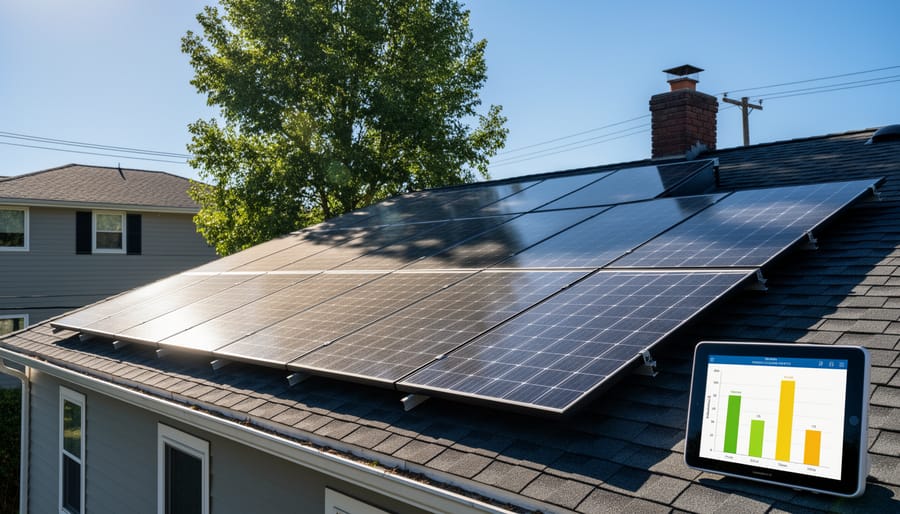
Solar panels can’t convert every photon into electricity because of fundamental physics. The Shockley, Queisser efficiency limit caps single-junction silicon cells at roughly 33% efficiency under ideal lab conditions. In the real world, commercial panels sold in 2026 typically achieve 20-26% efficiency because some sunlight photons carry too little energy to free electrons in the silicon, while others carry excess energy that’s lost as heat.
Manufacturing imperfects, reflective losses from the glass surface, and electrical resistance in the cells further reduce output. Even cutting-edge heterojunction and tandem-layer cells reaching 30-35% in research settings face these same constraints, just with better optimized materials. The upshot? Roughly three-quarters of the sunlight hitting your panels becomes waste heat rather than usable electricity, no matter how expensive or advanced the technology. This efficiency ceiling means you’ll need more roof space to generate a given amount of power compared to what the raw solar energy hitting that area might suggest.
How Weather and Geography Reduce Energy Output
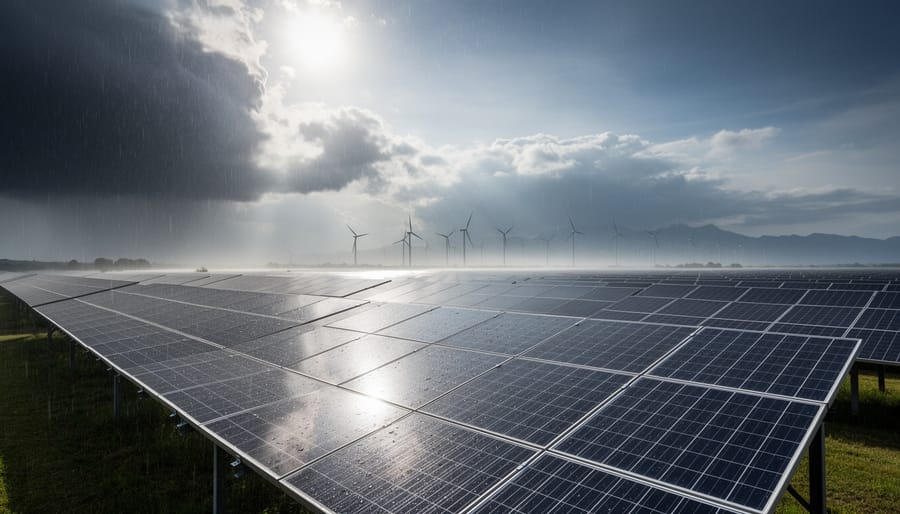
Cloud cover is solar’s most immediate weather challenge. Even thin clouds can reduce panel output by 40-50%, while thick storm clouds may cut production to just 10-20% of normal capacity. This intermittency, the unpredictable stop-start nature of solar generation, complicates grid management and forces homeowners to rely on backup power sources.
Geographic location dramatically affects annual energy yield. Panels in Arizona might generate 60-70% more electricity than identical systems in Seattle, simply due to sunshine hours and intensity. Latitude matters too: equatorial regions receive more consistent year-round solar radiation than northern climates, where winter sun angles reduce output by 30-40% compared to summer peaks.
Seasonal variation creates planning headaches. In northern states, December production might be one-third of July’s output, yet heating demands spike precisely when solar generation dips. Local microclimates add another layer, coastal fog, urban pollution, or frequent storms can significantly underperform even regional solar resource estimates. This geographic lottery means solar’s effectiveness varies wildly by location, making it a poor fit for some areas.
The Temperature Paradox: Why Heat Reduces Solar Efficiency
Most people assume solar panels thrive in hot weather, after all, they’re designed to harness sunlight. The reality is counterintuitive: as panel temperature rises above 25°C (77°F), electrical efficiency drops. For every degree above this threshold, typical crystalline silicon panels lose 0.3-0.5% of their power output.
This happens because heat increases electrical resistance within the solar cells, reducing the voltage they generate. While current output stays relatively stable, lower voltage means less overall power. A panel rated at 400 watts in laboratory conditions might produce only 340-360 watts on a scorching summer day when surface temperatures reach 65°C (149°F).
That’s why panels in cooler, sunny climates often outperform those in extremely hot regions, even with similar sunlight exposure. Modern panels use improved materials and better ventilation to minimize these losses, but physics still imposes limits.
Main Categories of Solar Panel Disadvantages
Upfront Cost and Financial Barriers
The most immediate obstacle for most homeowners remains the substantial upfront investment. In 2026, a typical residential solar installation costs between $15,000 and $30,000 before incentives, with the final price depending on system size, panel quality, and local installation rates. Residential system cost analysis shows that while per-watt costs have decreased over the past decade, the total system expense still represents a significant financial commitment for average households.
Even with federal tax credits reducing costs by 30 percent and state rebates offering additional savings, you’re typically looking at a net investment of $10,000 to $21,000. The payback period stretches 6 to 12 years in most regions, meaning you won’t see net positive returns until well into the system’s life. Financing options like solar loans and leases make monthly payments manageable, but interest charges can add thousands to the total cost, extending the break-even point further. For families without substantial savings or excellent credit, accessing affordable financing remains a real barrier to entry despite solar’s long-term savings potential.
Performance and Efficiency Limitations
Even the best solar panels convert only a fraction of available sunlight into electricity, with most residential systems producing power at 15-25% capacity factor, meaning a 10kW array generates closer to 1.5-2.5kW on average throughout the day. This variability demands careful planning during setup time to ensure your system matches actual energy needs, not just theoretical peak output.
Space constraints amplify this limitation. A typical household requiring 30kWh daily needs roughly 300-400 square feet of unshaded roof area, which can be challenging for smaller homes or properties with complex rooflines. Performance degrades further over time, typical 0.5%, 1% degradation annually means your panels lose 10-20% efficiency over 20 years.
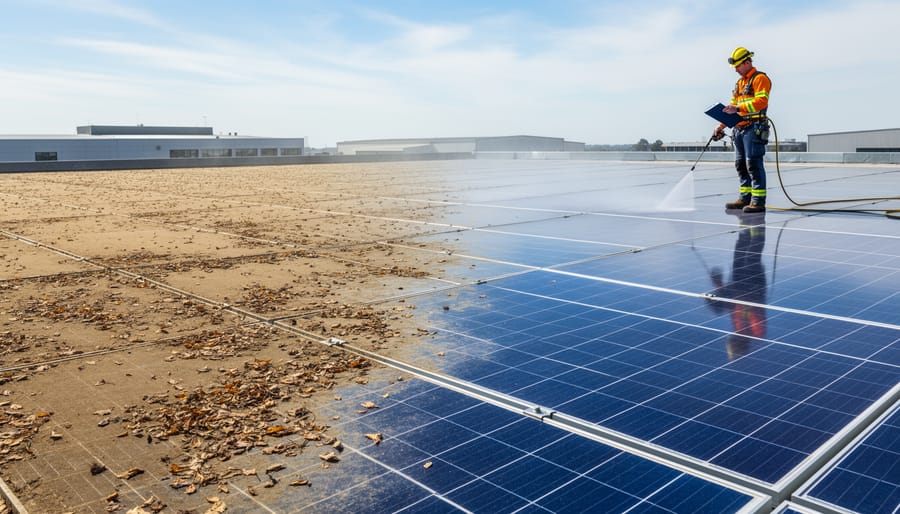
Soiling from dust, pollen, and bird droppings cuts output by 5-25% depending on location and cleaning frequency, while even partial shading from a chimney or nearby tree can reduce an entire panel’s production by 30-50% due to how cells are wired in series. These compounding factors mean real-world performance often falls short of manufacturer specifications.
Installation and Location Constraints
Not every roof can accommodate solar panels. Your home needs sufficient south-facing space (in the northern hemisphere) with minimal shading and a structure that can support the added weight, typically 3-4 pounds per square foot. Older roofs nearing replacement create a catch-22: install panels now and remove them for roof work later, or replace the roof first and delay solar benefits.
Physical obstacles compound these challenges. Trees, nearby buildings, chimneys, and vents cast shadows that disproportionately reduce output, shading just 10% of a panel can cut production by 50% due to how cells connect electrically. Many homeowners face HOA rules restricting panel placement or requiring approval that never comes. Renters and those in multi-unit buildings typically can’t install systems at all, regardless of roof quality.
Geographic location matters beyond sunny versus cloudy climates. Northern latitudes receive less direct sunlight year-round, while urban environments suffer from surrounding buildings blocking optimal sun exposure during peak hours.
Storage and Grid Dependency Challenges
Solar panels generate electricity only when the sun shines, creating a fundamental mismatch with typical energy consumption patterns. Most households use significant power during evening hours when panels produce nothing, forcing reliance on either grid connection or expensive battery storage.
Grid-tied systems solve this through net metering, but you remain dependent on utility infrastructure and vulnerable to outages unless you add backup batteries. Standalone battery systems capable of powering a typical home overnight cost $10,000-$15,000 in 2026, with lithium-ion units degrading 2-3% annually. This storage cost often exceeds the panel investment itself.
Cloudy stretches compound the problem. Three consecutive overcast days can drain batteries completely, leaving off-grid systems without power. Grid-connected homes avoid blackouts but sacrifice the energy independence many solar buyers seek, essentially using the utility as a giant free battery while paying connection fees regardless of how little grid power they actually consume.
Where Solar Panel Limitations Matter Most
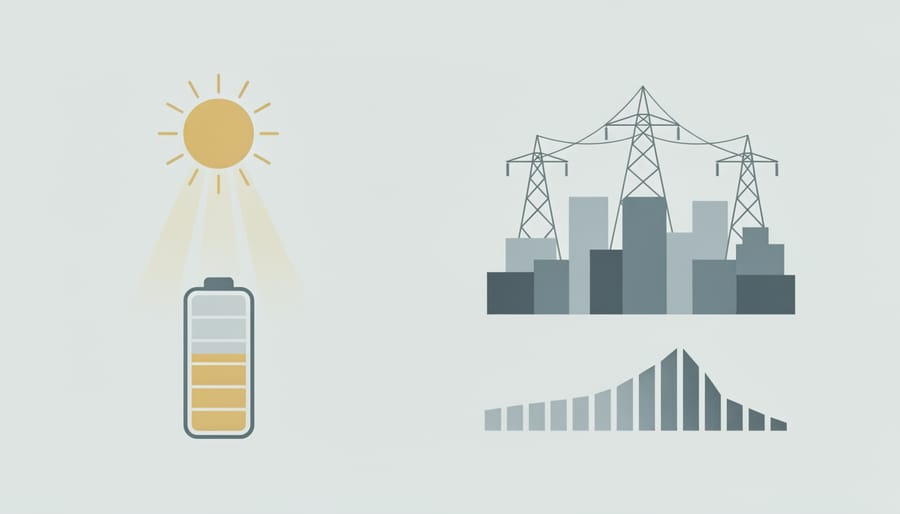
Residential Applications: When Home Solar Faces Challenges
Home solar faces its toughest challenges in specific residential scenarios where installation barriers compound performance limitations. Properties with mature trees or nearby buildings casting shadows for more than three hours daily often can’t generate enough power to justify the investment, even with modern panel efficiency. The timeline from quote to power extends significantly when roof replacements are needed first, homes with asphalt shingles nearing their 15-20 year lifespan require costly re-roofing before panels go up, adding $8,000-$15,000 to project costs.
Renters face the most frustrating barrier: landlords rarely approve permanent installations, leaving temporary solutions that demonstrate indoor solar limits rather than delivering meaningful energy savings. Geographic constraints matter too, homes in Pacific Northwest regions averaging under three peak sun hours daily struggle with solar reliability often requiring systems 40-50% larger than those in sunny climates to meet the same energy needs, which pushes costs beyond what many budgets can absorb.
Commercial and Industrial Use Cases
Large-scale commercial and industrial facilities face unique solar challenges that residential users rarely encounter. Manufacturing plants and data centers with massive energy demands often find that even extensive rooftop arrays can’t meet their full power requirements, a 100,000-square-foot warehouse might only generate 20-30% of its consumption. Businesses operating continuous production lines or climate-controlled environments can’t rely on intermittent solar generation without expensive battery systems that may prove economically unfeasible. Space limitations compound the problem: urban commercial buildings typically lack the acreage needed for ground-mounted arrays, while rooftop installations must navigate structural load limits, HVAC equipment, and building code restrictions. High-rise offices present particularly poor candidates, with limited roof area relative to their massive internal energy consumption across multiple floors.
Off-Grid and Remote Applications
Off-grid solar systems face the most stringent performance demands because they can’t fall back on the electrical grid during cloudy periods or nighttime. This makes battery storage absolutely essential, and prohibitively expensive for many applications. A typical off-grid home requires 10-20 kWh of battery capacity, costing $8,000-$15,000 in 2026, with replacement needed every 8-12 years. You’ll also need to oversize your panel array by 50-100% to account for seasonal variation and charging inefficiencies, dramatically increasing upfront costs.
Reliability becomes critical in remote locations where equipment failures can’t be quickly serviced. Extended cloudy periods in winter can deplete batteries completely, leaving properties without power for days. This forces off-grid users to maintain backup generators, ironically requiring fossil fuels, or accept periodic blackouts. Remote cabins, research stations, and telecommunications equipment face particular challenges balancing cost against the reliability needed for continuous operation.
Environmental and Lifecycle Considerations
While solar panels generate clean energy once installed, their production and disposal create environmental impacts worth acknowledging. Manufacturing photovoltaic cells requires significant energy, mostly from fossil fuels in countries like China, where most panels are made. The process also involves mining silicon, silver, and rare earth elements, which disrupts ecosystems and uses substantial water. A typical residential panel’s production emits roughly 40-50 grams of CO2 per kilowatt-hour of electricity it will eventually generate, compared to 900-1,000 grams for coal power.
Material sourcing raises ethical concerns too. Polysilicon production has been linked to forced labor practices in certain regions, prompting 2026 supply chain regulations that demand transparency. The industry is responding: major manufacturers now publish detailed sourcing reports and shift toward ethically verified materials.
End-of-life recycling presents perhaps the biggest challenge. Solar panels contain valuable materials, silver, copper, silicon, but current recycling infrastructure can’t handle the volume coming as first-generation installations reach their 25-30 year lifespan. Only about 10% of panels get recycled properly in 2026; the rest end up in landfills where lead and cadmium (used in some thin-film panels) can leach into soil.
However, these small solar tradeoffs pale beside fossil fuel extraction and combustion. Coal mining destroys landscapes permanently, oil spills devastate marine ecosystems, and burning these fuels continuously releases pollutants, not just during production but throughout operation. A solar panel’s lifetime carbon debt gets paid back in two to three years of clean generation.
The industry is improving rapidly. European regulations now mandate recycling programs, new technologies recover 95% of panel materials, and manufacturers are developing panels with fewer toxic components and lower production emissions.
How Technology Is Addressing Solar’s Weaknesses
While solar panels face real limitations, the industry isn’t standing still. Engineers and researchers have made remarkable progress in 2026 addressing the technology’s core weaknesses, transforming yesterday’s dealbreakers into tomorrow’s footnotes.
Perovskite solar cells represent perhaps the most exciting efficiency breakthrough. These next-generation materials can theoretically reach 33% efficiency, significantly higher than conventional silicon panels, while costing less to manufacture. Several companies now produce tandem cells that layer perovskite over silicon, pushing commercial efficiency past 30% and squeezing substantially more power from the same roof space.
Battery storage has evolved dramatically, tackling solar’s intermittency problem. Lithium iron phosphate (LFP) batteries now dominate residential installations, offering 15-20 year lifespans at prices that have dropped nearly 60% since 2020. These systems store excess daytime generation for evening use, reducing grid dependency and making solar viable even in regions with inconsistent weather patterns.
Several technological advances are simultaneously addressing solar’s key disadvantages:
- Bifacial panels capture reflected light from the ground, boosting output by 10-30% without additional roof space
- Advanced solar tracking systems optimize panel angles throughout the day, increasing generation by up to 25%
- Anti-soiling coatings reduce cleaning frequency and maintain efficiency in dusty environments
- Improved recycling processes now recover 95% of materials from end-of-life panels, addressing environmental concerns
- Thin-film technologies enable solar integration into windows and building materials, eliminating space constraints
Manufacturing improvements have cut production costs and carbon footprints simultaneously. Modern facilities use less energy and toxic materials than earlier generations, while automated recycling programs ensure panels don’t end up in landfills. The industry has essentially created a circular economy model where old panels become raw materials for new ones, shrinking the lifecycle environmental impact that critics once highlighted.
Common Questions About Solar Panel Drawbacks
How long do solar panels actually last?
Quality solar panels typically last 25-30 years before needing replacement, though they continue producing power beyond that timeframe at reduced efficiency. Most manufacturers guarantee 80-90% of original output after 25 years, meaning degradation is gradual rather than sudden.
Do solar panels work in cloudy or rainy climates?
Yes, panels generate electricity on cloudy days, just at 10-25% of their sunny-day capacity depending on cloud thickness. Regions like Germany and the UK have thriving solar markets despite frequent overcast conditions, though output is more variable than in sunnier locations.
What happens when a solar panel stops working?
Panel failures are rare, but when they occur, most systems continue operating at reduced capacity since panels are connected in arrays. Individual failed panels can be replaced under warranty or purchased separately, though troubleshooting requires a qualified technician to identify the problem.
How much maintenance do solar panels really need?
Minimal maintenance is required, typically just hosing off dust and debris a few times per year in most climates. Professional cleaning every 1-2 years may boost output by 3-5% in dusty areas, while inverters generally need replacement once during the system’s lifetime.
Are solar panels worth it despite the disadvantages?
For most homeowners with suitable roofs and moderate electricity costs, yes, systems typically pay for themselves in 6-12 years while providing 20+ additional years of reduced energy bills. The calculation depends on your local electricity rates, available incentives, and solar resources, so running the numbers for your specific situation is essential.
Can solar panels damage my roof?
Properly installed systems won’t damage your roof and can actually protect the covered area from weather exposure. However, installation requires drilling mounting holes, and removing panels later for roof repairs adds cost, which is why assessing roof condition before installation matters.
These questions reflect the concerns that stop many people from committing to solar. The reality is that most disadvantages become manageable once you understand them. Panels are durable enough that longevity isn’t a practical worry for most buyers, and modern systems handle partial shading and weather variability better than earlier generations. The maintenance burden is lighter than most household systems, requiring less attention than your HVAC or water heater.
The “worth it” question has no universal answer because it hinges on factors specific to your situation. A homeowner in Arizona with high electricity rates and a south-facing roof sees faster payback than someone in a cloudy climate with cheap grid power. What matters is running realistic projections based on your location, energy use, and financing options rather than relying on generalized claims about solar’s value.
Solar panels come with genuine limitations that deserve careful consideration. The high upfront investment, efficiency constraints that cap energy conversion around 26% for most commercial systems, weather dependency that reduces output on cloudy days, and significant space requirements are real factors that affect performance and practicality. These aren’t minor inconveniences, they directly impact your energy goals and financial planning.
However, dismissing solar energy based solely on these disadvantages overlooks the bigger picture. Technology continues advancing rapidly, with perovskite cells, improved battery storage, and enhanced recycling programs addressing many traditional weaknesses. More importantly, the long-term benefits, decades of reduced electricity bills, substantial carbon footprint reduction, and increasing energy independence, often outweigh the initial challenges for most homeowners and businesses.
The key is making an informed decision tailored to your specific situation. Evaluate your roof condition, local climate patterns, available incentives, and energy needs against the limitations discussed throughout this article. Solar isn’t universally perfect, but for many applications in 2026, the environmental imperative and improving economics make it a viable path forward. Understanding both the advantages and disadvantages positions you to decide whether solar aligns with your goals, rather than letting misconceptions or incomplete information guide your choice.


